Supreme Court Declines to Hear Poppleton Redevelopment Lawsuit
The ruling leaves six West Baltimore residents without a federal remedy after a 20-year pause in a 13.8-acre project.
By Nia Foster ·
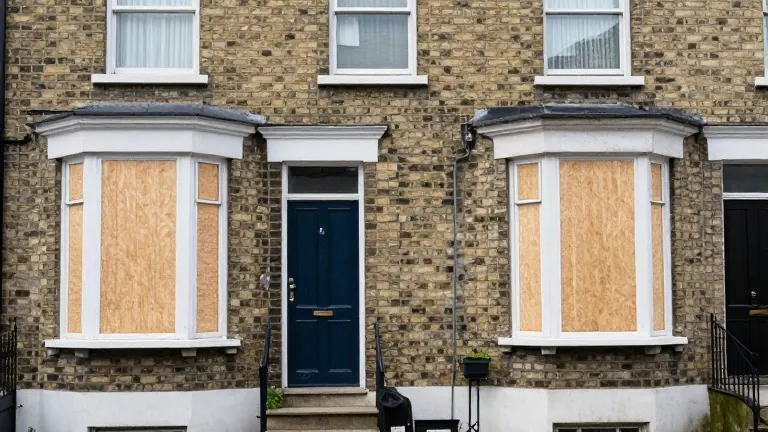
The United States Supreme Court has closed the door on a federal challenge brought by residents of the Poppleton neighborhood in West Baltimore. The denial, issued this week, ends a two-year legal battle over the use of eminent domain for a stalled private development. The court did not provide a written explanation for its decision, a common practice when justices decline to hear cases.
The lawsuit targeted La Cité Development and other parties. It alleged that the city’s seizure of homes for a commercial project, followed by a lack of construction, diminished the value of remaining properties. Six residents, including Sonia Eaddy, president of the neighborhood group Poppleton Now, filed the suit in August 2024. They joined the neighborhood association in arguing that the neighborhood suffered lasting damage from the developer’s inaction.
Tom Prevas, a former city planning commissioner and Baltimore land use attorney, represented the residents at no cost. Prevas framed the issue as a nuisance claim. He argued that just as a neighbor can sue a polluter, residents should be able to sue a developer whose project disrupts their block. Prevas told The Baltimore Banner, “They have gotten a raw deal, and they continue to get a raw deal. And people should be helping them more than they are.”
Lower courts produced conflicting rulings on the merits of the case. A federal district court initially dismissed the suit, stating the plaintiffs lacked standing because their own homes were not taken. The 4th U.S. Circuit Court of Appeals reversed that standing analysis, finding the residents likely suffered harm. However, the appellate court still upheld the dismissal. Judges questioned how a court could legally order a neighborhood to be restored, leaving the residents with a recognized injury but no available remedy.
The redevelopment plan covered 13.8 acres west of Martin Luther King Jr. Boulevard. It called for approximately 2 million square feet of construction across four phases. The proposal included 1,650 homes and commercial space with a grocery store. La Cité has completed only one project: the 262-unit Center/West apartment complex on North Schroeder Street. Reports indicate the complex has struggled to attract renters, and the promised grocery store never opened.
State lawmakers redirected a $500,000 grant, originally designated for the Poppleton grocery store, to Open Works Baltimore. This makerspace nonprofit is planning a second location in West Baltimore. Much of the neighborhood remains vacant land owned by the city but controlled by La Cité. Dan Bythewood Jr., the founder and president of La Cité, did not respond to requests for comment from The Baltimore Banner.
The case also drew attention as a potential test of the 2005 Kelo decision. That ruling upheld a Connecticut city’s taking of homes for a development that was never finished. Four current Supreme Court justices have signaled interest in revisiting Kelo. However, George Mason University law professor Ilya Somin told The Baltimore Banner that the Poppleton case was not the appropriate vehicle for that change. By declining the petition, the court left the 2005 precedent intact without ruling on the residents' specific claims.