Thinktank urges UK to strip back high street clutter
A new report argues that replacing car infrastructure with simple, low-cost pedestrian spaces boosts local spending more than major building renovations.
By Tomas Gonzalez ·
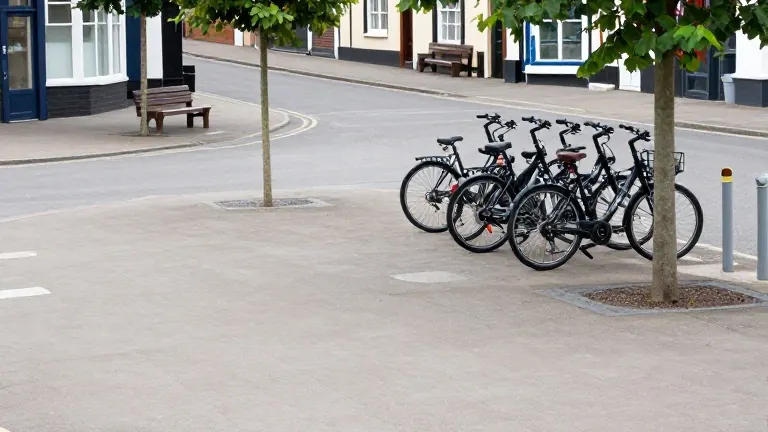
British high streets are suffering from a design flaw: they are built for cars to pass through, not for people to stay. A new report led by the urban thinktank Create Streets argues that the solution is not multimillion-pound revamps but cheaper, targeted changes. The study contends that the current approach to urban centers is joyless and overly focused on vehicle access.
The report identifies a specific economic inefficiency in how street space is used. In a typical market town, a single parking space accommodates about 3.5 vehicles per day. This generates just over £73,000 in annual spending for nearby shops. If that same 12 square meters were converted to hold nine shared e-bikes, the space would support an average of 13 trips daily. That shift would generate over £146,000 in annual spending, even after accounting for lower individual transaction values. In busier cities, the estimated annual spend from that bike space rises to more than £300,000. Outside dining areas offer smaller but still notable gains, contributing about £120,000 in extra annual spending in a city center.
Create Streets and co-author Cyclehoop argue that planners must rethink their priorities. The report criticizes planning regulations that favor conformity and treat speeding cars as a given. It calls the default high street a catalogue of tarmac, guardrails, and plastic planters. The authors state that removing pedestrian guardrails next to roads is the most cost-effective upgrade for most high streets. They describe these barriers as eyesores with minimal safety benefits.
The study uses the "wrist test" to measure the health of a street. This metric asks whether it feels safe to let go of a young child's wrist so they can roam freely. The report argues that this safety is best achieved by removing the threat of speeding vehicles rather than mitigating their impact. It points to Altrincham in Cheshire as a success story. That town created a walkable, car-free urban area, which helped retail vacancies fall from over 30% to 7% in less than a decade. Another example is Grimsby, where an unused patch of land next to a church was turned into a park for less than £20,000.
David Milner of Create Streets said, "Streets that are ugly are not so because councils lack the desire to change them, but because the system is counting the maintenance liabilities, not the benefits." He added, "What works is cheap: trees in the ground, benches people want to sit on, clutter taken away." Milner criticized the temporary nature of current street improvements, encouraging more permanent features like trees planted in the ground rather than in large pots.
The report also challenges the Secured by Design policy guidelines. Critics note that these rules often lead police to advise removing benches and plants to discourage antisocial behavior. The study calls this "the absurdity of modern public realm management." It recommends a presumption of removal for any street item that cannot be justified.
Prime Minister Andy Burnham pledged in September to reverse the decline of high streets. He announced a £210m regeneration fund for the effort. However, the bulk of that money is earmarked for buildings, such as converting old shops into workspaces or keeping pubs open. The report argues that renovating buildings is pointless if the street outside remains unappealing.
A spokesperson for the Ministry of Housing, Communities and Local Government said, "We support local leaders to make decisions on pedestrianisation based on their communities’ needs." The spokesperson added that the Hope on the High Street strategy will help protect community assets and tackle the spread of vape and gambling shops. Funding is available for local leaders to spend on their priorities, including pedestrianising and regenerating their high streets if they so wish.