Trump: Both sides ready to deal
The US president claims Ukraine and Russia are close to a settlement, even as European leaders prepare for talks in Brussels and Abu Dhabi.
By Julian Schulz ·
The ongoing conflict between Russia and Ukraine has entered a new phase of diplomatic activity. President Donald Trump stated in an interview with the Financial Times that both nations are prepared to close a deal to end the war. He described the current situation as distinct from major historical conflicts, noting, "I don't consider that we are in war like Ukraine, wars like World War I, World War II." Trump added that he remains optimistic about the progress of peace talks, asserting, "I think they're both at the point of saying, 'Let's make a deal'." However, the Financial Times reported that Ukrainian negotiators do not share this level of optimism.
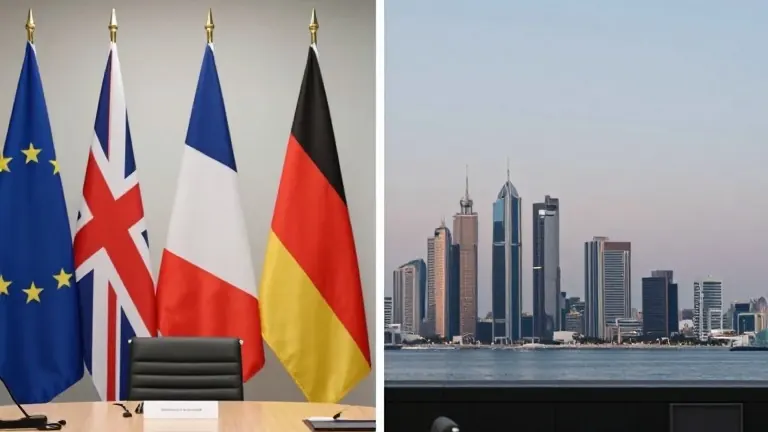
Diplomatic efforts are accelerating across multiple fronts this week. US Special Envoy Steve Witkoff announced that the American team will meet with representatives from France, Germany, the United Kingdom, the European Union, and NATO in Brussels. The group will discuss security guarantees for Ukraine among other key issues. Simultaneously, Kremlin spokesperson Dmitry Peskov confirmed that a Russian delegation will arrive in Abu Dhabi on November 10 and 11. Vladimir Medinsky, an aide to Russian President Vladimir Putin, will lead the team for the Ukraine-US-Russia talks.
Ukrainian President Volodymyr Zelenskyy recently expressed a cautious sense that Russia is serious about the Abu Dhabi meeting. He made this assessment after a conversation between European leaders and the Kremlin. At the Berlin Security Conference, Zelenskyy characterized the geopolitical stance of Moscow, stating that for Russia, "a peaceful and united Europe is its enemy." These statements set the stage for the upcoming gatherings in both Brussels and the United Arab Emirates.
The next scheduled event involves the arrival of the Russian delegation in Abu Dhabi on November 10. This meeting is expected to bring together the three primary parties in the conflict for direct negotiations. The outcome of these talks, along with the discussions in Brussels, will determine the immediate trajectory of the diplomatic process.