Review Finds Most of Israeli Transport Minister Regev's Major Road Promises Unfulfilled
A review by Walla Cars and the Or Yarok association concludes that Transportation Minister Miri Regev has delivered little on her road safety and cost-of-living pledges as fatalities remain near two-decade highs.
By Live Media Online Staff ·
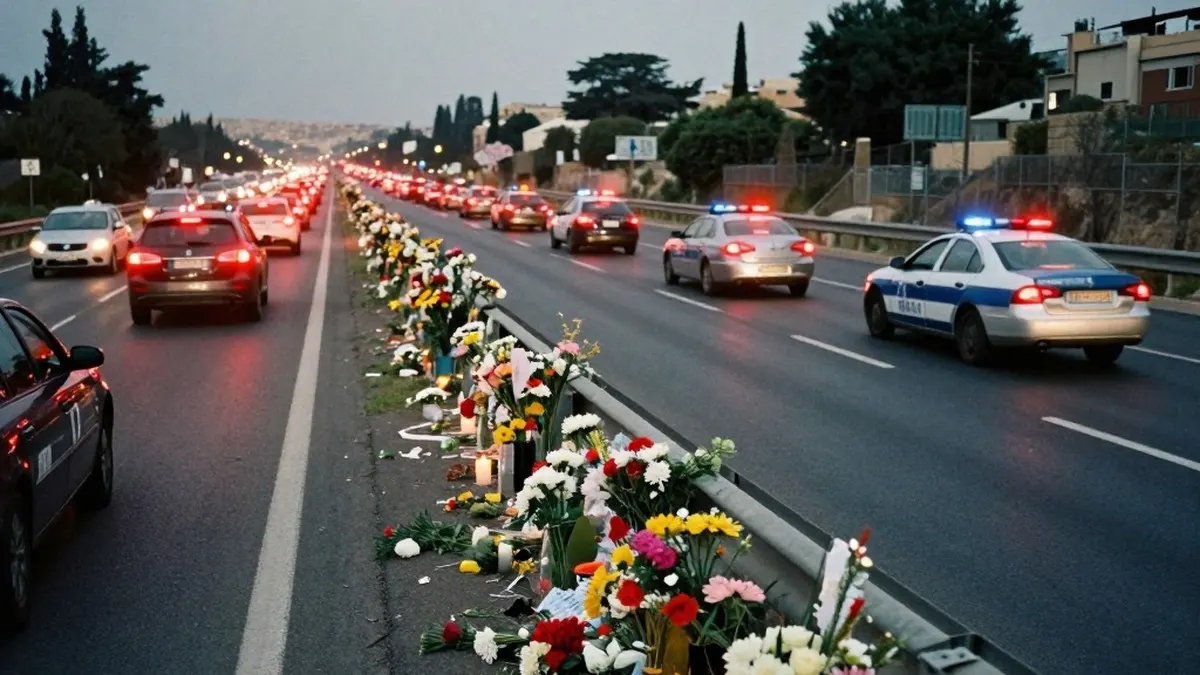
Since Miri Regev returned to the Transportation and Road Safety Ministry on December 29, 2022, road deaths in Israel have not come down, according to a review by Walla Cars and the Or Yarok road safety association. Fatalities reached a two-decade high in both 2024 and 2025. This year shows only a slight decline, driven by a sharp drop in March, when the country was sheltering during Operation Roaring Lion.
At the end of 2025, the European Transport Safety Council (ETSC) suspended Israel's National Road Safety Authority from its Road Safety Performance Index program until further notice. The council said the current Israeli government's recent actions were not consistent with its fundamental commitment to protecting human life. The Transportation Ministry called the move political, but the review points to rising casualties, unlike in most European countries, and to the exits of Avi Naor, the authority's former chairman, and Erez Kita, its former director general.
On ride-sharing, Regev told MK Eitan Ginzburg on October 22, 2025: "Uber will be in Israel. Period." His bill to let private drivers carry paying passengers passed a preliminary and a first reading in the Knesset, then stalled. As of October 2026 ride-sharing remains illegal, though the ministry rarely acts against unlicensed drivers, particularly in the Haredi community, who avoid the insurance, licensing and taxi-permit costs that legal cab drivers bear.
Tougher penalties for texting while driving have also not arrived. At a Yedioth Ahronoth transportation conference, Regev said a first offense would bring an immediate 10,000-shekel fine without court, and a second would mean confiscation of the vehicle. She repeated the pledge to raise fines on December 2, 2025, but no stiffer fines are in force.
Other cost-of-living moves have faltered too. Abolition of the internal driving test, which costs learners between 150 and 400 shekels, was written into the 2026 budget agreements and scheduled for June 18, 2026. One day before it was due, the ministry postponed it after driving instructors protested and technical problems emerged, and no new date has been set. On Tesla's full self-driving system, Regev promised in October 2025 to speed approval, and several European countries have since approved it. Israel has not changed the rule requiring hands on the wheel or settled liability for crashes in autonomous mode with the Commissioner of Insurance.
The government approved a national road safety plan for 2026 to 2030 in Resolution 3491 on November 16, 2025. It aims to cut casualties by 25% within five years compared with the 2021 to 2025 average and to place Israel among the seven leading countries in road safety. The ministry announced 350 million shekels a year for the effort, and Regev spoke of "a dramatic national move to save lives." As of October 2026, the money has not been transferred.
A proposal from August 2024 to cut required lessons for automatic vehicles from 28 to 22 was dropped after opposition from Or Yarok, the ETSC and professionals at the road safety authority. A June 2023 plan to let licensed garages perform annual vehicle inspections is stuck in the legislative process. The law once allowed this but changed it over the conflict of interest in a garage both finding and fixing faults. A pledge to shorten waits at the Medical Institute for Road Safety, through outsourcing, also remains incomplete.
A ministerial committee on road safety, announced on November 24, 2024 and chaired by Prime Minister Benjamin Netanyahu, met only on May 4, 2025, October 26, 2025 and February 8, 2026. Netanyahu attended none of the sessions, and no significant decisions came out of them.
Yaniv Yaakov, CEO of Or Yarok, said Regev made many promises but only a small portion served road safety, and that wrong priorities produced the worst figures in two decades and Israel's removal from the ETSC report. "Inaction costs human lives," Yaakov said, adding that the next minister must put saving lives first.
Source: The Jerusalem Post