Venezuelan Amputees Face Steep Costs as Aid Dries Up
With international funding at less than half of requirements, survivors of the June earthquakes must pay for lifelong prosthetic care in a low-wage economy.
By Nia Foster ·
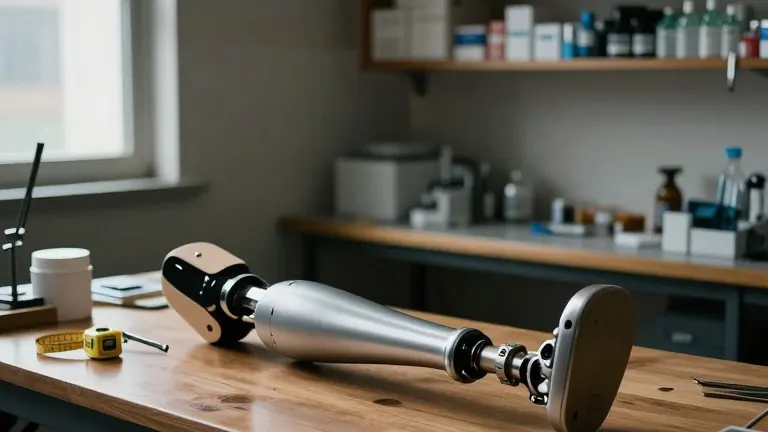
Recovering from the twin earthquakes that struck Venezuela on June 24 now means managing expensive medical needs with shrinking support. Ricardo Contreras, 24, sits in a workshop in northwestern Caracas preparing for a prosthetic leg. His parents died in the collapse that pinned his left leg for hours, forcing an amputation. He and his 16-year-old brother, Andres, are among thousands of survivors facing lifelong health costs.
International aid has declined sharply since the initial rescue efforts. As of September, UNICEF reported securing only $29.5 million of the $65.7 million needed for its earthquake support in Venezuela. This represents a 55 percent funding shortfall. The International Red Cross stated its Venezuela response was 39.8 percent funded during the same period.
The cost of prosthetics places a heavy burden on families. Bianca Damaso, director of the Ortoprotecnica workshop in Caracas, notes that fitting a prosthesis requires two to three months of physiotherapy and rehabilitation. She said there are over 100 types of knees and more than 200 skin shades available, but the process does not end with the first fitting.
John Pablo Dos Santos, founder of the Juan Pablo Dos Santos Foundation, provided specific price ranges for the artificial limbs. A below-knee prosthesis costs between $3,000 and $5,000. An above-knee prosthesis costs between $7,000 and $12,000. Electronic limbs that react to muscle movement can cost tens of thousands of dollars. The foundation added about 200 people to its database after the earthquakes, joining a waiting list that already held hundreds of patients.
Karina Bechara, who lost both legs after being trapped for 23 hours, hopes to stand on her new prosthetics by December 1. She previously ran her own business and trained in CrossFit. Now, she relies on her children for daily tasks. "That motivates me every morning to get up and say, 'One day less to go,'" Bechara said.
The healthcare system faces structural limits. Ana Rosario, president of the Caracas Nurses Association, said hospitals often lack sufficient nurses and supplies. Although healthcare is technically free, patients pay for medicines, tests, and transport. "When a test, medication or procedure is delayed, recovery can also be delayed, and new complications can arise," Rosario said.
Ricardo Contreras has returned to his university and his family’s truck parts business. His professors moved his classes to the ground floor to accommodate his crutches. He is now Andres’s legal guardian and applies for government housing. The average private-sector salary in Venezuela is just over $200 a month, making the $12,000 cost of an above-knee amputation a major financial hurdle.
Damaso emphasizes the mental aspect of recovery at her workshop. She stated that the only thing forbidden is saying, "I can’t." Contreras said the hardest adjustment is losing his parents. "If my leg hurts, I take a pill, but with that, there’s nothing I can do," he said.
Source: Al Jazeera