200 Signatures Filed Against Hopkins Supply Store Cuts
A petition organized by graduate researchers demands transparency after university stores reduced inventory on Oct. 1.
By Nia Foster ·
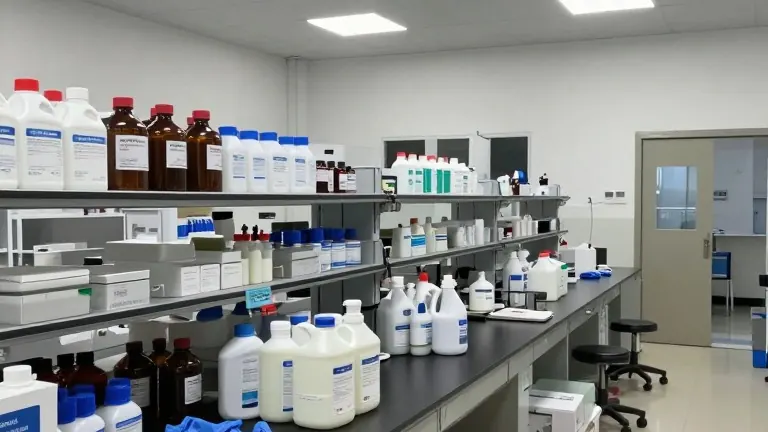
Graduate researchers at Johns Hopkins University have gathered more than 200 signatures on a petition challenging operational cuts to campus Supply Stores. The stores, located in Mudd Hall and the Pre-Clinical Teaching Building, have supplied researchers on the Homewood and East Baltimore campuses with gloves, labeling tape, and cellular media. The new operating model took effect on Oct. 1 and applies only to those two JHU Procurement-managed locations, not to other university supply channels or local stockrooms.
A university spokesperson said the reduction responds to changes in purchasing patterns and preserves access to items that require specialized handling or regulatory support. The spokesperson stated that communications with divisions about the changes began in early August. The university responded to the petition on Oct. 16 from doctoral students and the research community, rather than from the Teachers and Researchers United (TRU-UE) union. The spokesperson said the university is working with the union through established processes to address work-related concerns.
Researchers said the stores functioned as intermediaries between vendors and labs, buying supplies in bulk and negotiating institutional discounts. Joanna, a sixth-year Ph.D. student in chemistry, said the stores also handled receiving, transportation, and storage. Marie, a sixth-year Ph.D. student in molecular biophysics, reported that the university announced in August that inventory reductions would begin Oct. 1. Remaining stock would be limited to items like ethanol, biohazard bags, and products requiring specialized handling or regulatory compliance. Marie said many workers observed supplies dwindling throughout September, before the scheduled reduction date.
Sneha, a sixth-year Ph.D. student in cell, molecular, developmental biology and biophysics, said some Supply Stores also managed shipping and receiving for temperature-sensitive reagents. In biology, refrigerators and freezers held these materials until researchers retrieved them. Sneha wrote that departmental administrative staff must now assume receiving duties without equivalent storage infrastructure. "Administrative offices do not have the same capacity for storage and handling of sensitive reagents that the Supply Stores did, resulting in potential degradation of expensive materials," Sneha wrote. Sneha also said researchers had no input into the decision and questioned the timeline. "The decision to close Supply Stores was announced suddenly and with no input from researchers," Sneha wrote. "It is unclear how this decision was reached and why the timeline was so accelerated."
Costs and lead times are projected to rise for labs that previously relied on the centralized stores. Joanna estimated the chemistry department's stockroom could cover only about 75% of what her laboratory needs. She said labs will now order directly from vendors, increasing lead times and costs. Marie said researchers are exploring the university's Core Store and suppliers such as ThermoFisher, Millipore, and Genesee Scientific. She said many researchers believe added costs for basic supplies will total thousands of dollars monthly.
Kelly Chen, a second-year Ph.D. student in chemistry, said almost every lab in the department regularly purchased solvents, sample containers, and protective equipment from the stores. Chen added that undergraduate laboratory courses also obtained equipment from them. A university spokesperson said the transition lets researchers compare suppliers and access a wider range of products. Marie said university administrators told her they intended to act on the petition shortly.
Source: The Johns Hopkins News-Letter