Automated Vehicle Lighting: Federal Agencies Propose Cyan Marker Standard
The NHTSA is seeking to establish a uniform blue-green light requirement for self-driving cars to distinguish them from human-operated vehicles.
By Samir Nasser ·
The long-standing debate over how to visually identify driverless vehicles on public roads has reached a decisive regulatory turning point. Federal authorities have moved beyond theoretical concepts to propose a specific, standardized visual cue for autonomous operations.
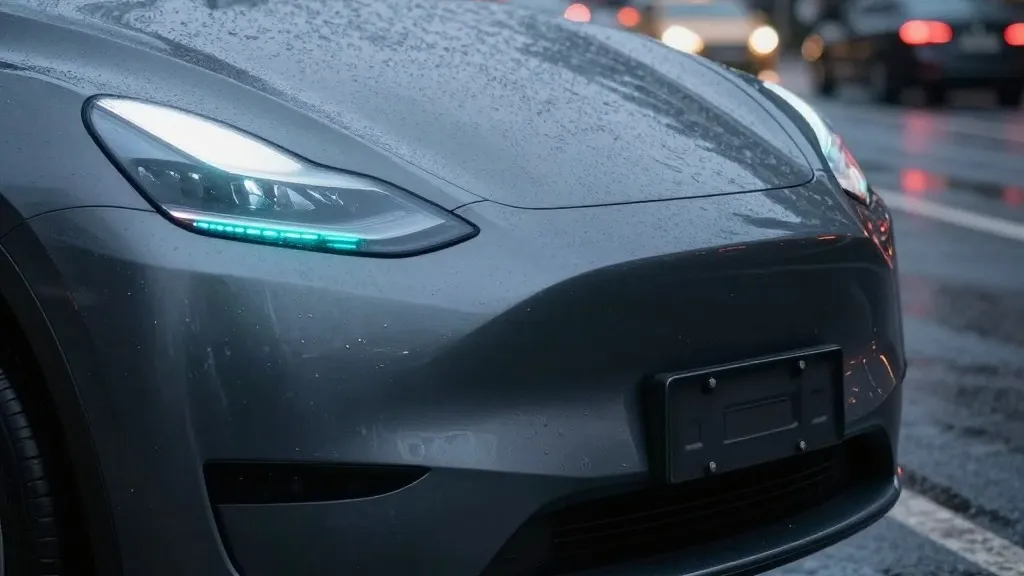
The National Highway Traffic Safety Administration (NHTSA) has released proposed revisions to Federal Motor Vehicle Safety Standard No. 108. The central element of this update is the introduction of cyan-colored marker lamps. These lights are designed to provide a clear and consistent signal to law enforcement and other road users that an automated driving system is currently controlling the vehicle.
The selection of cyan is a strategic response to the current visual landscape of automotive lighting. Existing industry standards rely heavily on red for braking, amber for turn signals, white for headlights, and flashing blue or red for emergency services. By introducing a distinct blue-green hue, regulators aim to fill a visual gap that allows autonomous vehicles to be identified without causing confusion among human drivers.
While this specific color choice has seen limited real-world application, there is precedent for similar approaches. Mercedes-Benz previously received state-level approval for turquoise lights on its Level 3 Drive Pilot vehicles. Although the automaker has since shifted its strategy toward a Level 2++ system, the NHTSA intends to create a national standard. This would allow operators such as Waymo, Nuro, and Zoox, as well as manufacturers like GM and Mercedes, to adopt a uniform signaling method across the country.
Under the proposed rule, the installation of cyan marker lights would remain optional for manufacturers. However, the regulation would establish official federal standards for the color, brightness, and placement of these lights. The goal is to ensure that any automaker choosing to implement the feature does so using a consistent and legal configuration, preventing a fragmented market of varying colors and signals.
The proposal also addresses legacy requirements that may no longer be relevant for vehicles without human drivers. The agency plans to remove mandates for physical hazard switches, manual beam shifters, and interior turn levers. Additionally, NHTSA proposes updating the 12.8-volt testing standard to accommodate modern LED architectures, thereby reducing administrative burdens for manufacturers building with contemporary technology.
The agency is also considering eliminating requirements that dictate the relative positioning of high-beam and low-beam lights. This flexibility is part of a broader Department of Transportation initiative to streamline the deployment of automated vehicles. The administration aims to simplify the process for automakers designing cars without traditional human controls, such as steering wheels and pedals.
Despite these efforts to modernize regulations, enforcement of existing rules remains active. Last month, the NHTSA initiated an audit query into the Tesla Cybercab. The investigation seeks to examine the technical data and processes Tesla relied upon when certifying the vehicle. A key point of contention is the absence of sideview mirrors, pedals, and a steering wheel, all of which are currently required under existing FMVSS guidelines.
This dual approach highlights the current regulatory landscape: one hand is working to update standards for future-proof autonomous designs, while the other ensures that current vehicles comply with established safety requirements. The proposed cyan light standard represents a significant step toward creating a unified visual language for the growing fleet of robotaxis on American roads.
Source: The Verge