China's Communist Party demands more loyalty and initiative from officials
A four-day closed-door leadership meeting in Beijing put strict party discipline at the center of Xi Jinping's agenda as questions about the 73-year-old leader's eventual succession continue to grow.
By Nia Foster ·
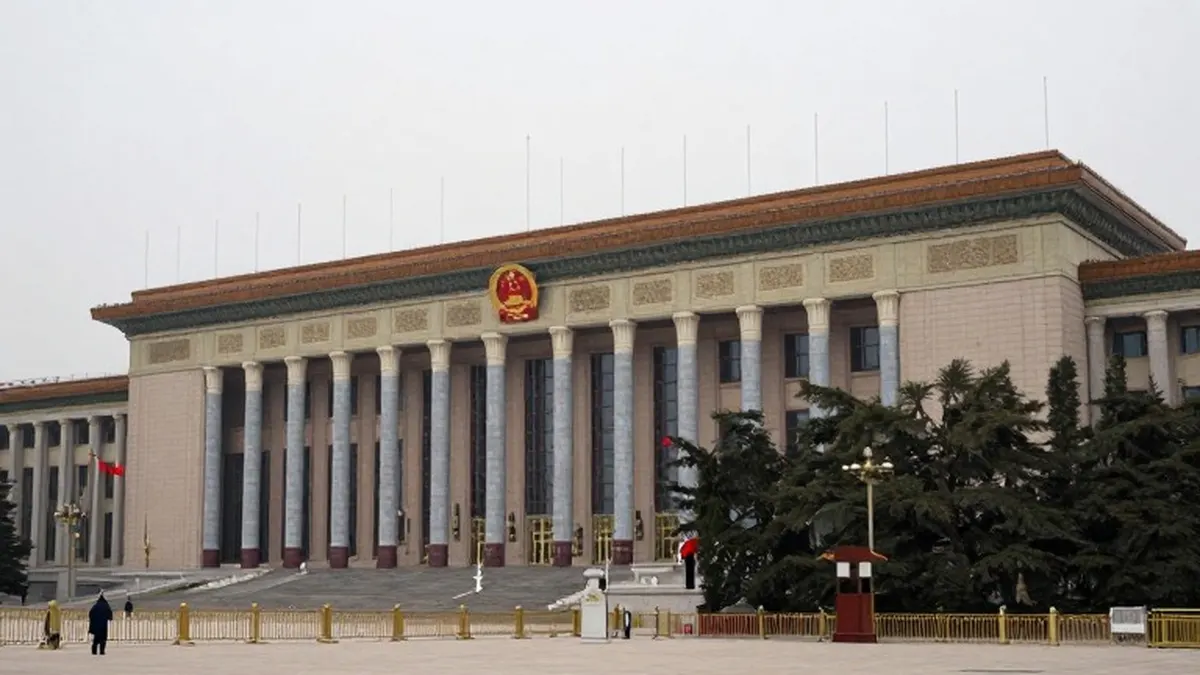
China's Communist Party leadership concluded a four-day closed-door session in Beijing this week that centered on tightening discipline and enforcing strict leadership within the ruling party's ranks.
Xi Jinping, who serves as both the party's general secretary and China's head of state, signaled he would deepen the long-running anti-corruption campaign while pressing officials at every level to demonstrate greater loyalty and show more initiative.
In a press release issued on Thursday, the committee published a resolution praising the leadership and Xi for "enormous political courage and strong sense of responsibility" in confronting corruption and the weakening of the party's governance. The statement stressed the need to "consistently advance comprehensive and strict Party leadership."
Kerry Brown, head of the Lau China Institute at King's College London, said Xi is seeking to minimize potential sources of instability at a time of international tension and domestic problems, including economic difficulties. "This is just going to intensify because if [the CCP] isn't disciplined and united, the party believes that it will go the same way as everywhere else in the world at the moment and become disunited and unstable," Brown told DW.
Xi has also recently spoken of the need to identify and remove "two-faced functionaries" from the political system. In a speech published in mid-October by the party's Qiushi Magazine, he described such figures, officials who profess loyalty to the central leadership while working against its instructions and pursuing their own "individualistic" goals, as "political opportunists." He also criticized cadres who pretend to be "nice guys," using harmony as an excuse to stand aside when problems arise.
Brown said China's political system now faces a crucial dilemma. If officials at all levels are expected to show innovation and courage in solving problems, the party's control could weaken, which could in turn fuel corruption. But if leaders lean harder on strict party leadership and increase pressure on the rank and file, they risk suppressing initiative, an effect that could reach beyond the party and even affect the military. The party, he noted, is "very, very risk averse."
Chong Ja Ian, a political scientist at the National University of Singapore, said party functionaries under Xi have only limited space to make their own decisions, so the push for individual initiative is not necessarily a major issue. "The 'proactivity' demanded by Xi is limited to the implementation, not decision-making," he told DW.
Brown added that Xi appears ready to sacrifice a degree of operational flexibility in exchange for more control and stability. "As long as you have unity, you live for another day, right? But if you have disunity, you probably die the same day," he told DW. That approach "kind of works" for now, he said, noting: "It's not like the Chinese economy is disastrous. It's not great, but it's not disastrous. In any case, look at the outside world. It's a mess."
Outside observers are also focused on the future of the 73-year-old leader and the question of who might succeed him. Xi appears firmly in control and is highly likely to be confirmed as the party's general secretary next fall, and he could remain in the post until 2032, following changes he pushed through in 2018 that removed term limits for state and party leaders.
Both analysts said the succession question plays a major role in Xi's drive for internal stability. "There's always a danger of differences in the party fragmenting it, especially when the question of succession comes up," Brown said, adding that even though no successor is expected soon, speculation about who might follow Xi is inevitable. "He can't go on forever." Chong said Xi, who currently holds all the power, may fear his authority would be undermined if he named a successor too early, while failing to prepare in time could create a power vacuum and major instability. Resolving that dilemma, he said, requires both self-confidence and a readiness to eventually step back, as Xi's predecessors did, and not every leader has that kind of confidence.
Source: Deutsche Welle