Democrats secure both chambers in historic midterm sweep
Republicans lose at least 42 House seats and seven Senate seats, shifting control of Congress and state governments to the opposition.
By Nia Foster ·

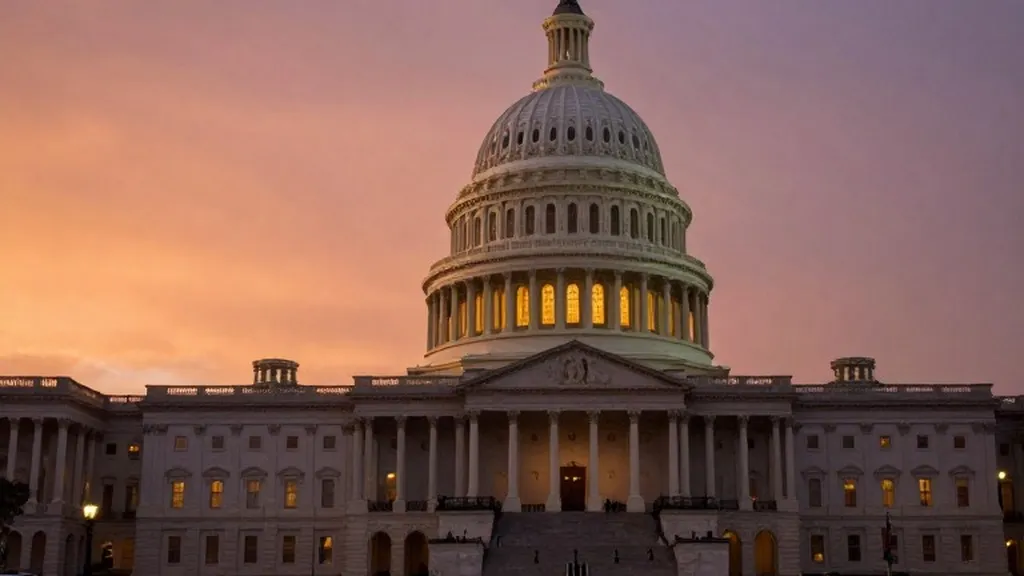
The midterm elections of November 3, 2026, concluded with a decisive shift in power that saw the Democratic Party capture majorities in both the United States House of Representatives and the Senate. This outcome marks a significant change from the previous political landscape, where Republicans held control of both chambers. The results, compiled as of 4 p.m. EST on November 6, indicate that Democrats have secured at least a 250 to 157 majority in the House and a 54 to 44 majority in the Senate. This shift represents one of the largest seat swings against a sitting president's party in recent history, placing the election in the top 20 percent of such events in terms of magnitude.
In the House of Representatives, Democrats picked up at least 43 seats from their opponents. Of these gains, 42 seats were previously held by Republicans, while one was held by an independent candidate. Although the net loss of 42 seats falls short of the 48 seats typically required to qualify as a wave election for the House, the magnitude of the shift remains substantial. Uncalled races may still alter these final totals, but the current trajectory confirms a robust Democratic majority that will shape legislative priorities for the next two years.
The Senate results provide a clearer picture of the wave dynamics at play. Democrats won seven seats previously held by Republicans, flipping control of the chamber. This net loss for the Republican Party is significant in the context of midterm elections, where the party of the sitting president usually faces headwinds. The acquisition of these seven seats gives Democrats a comfortable majority in the upper chamber, allowing them to advance legislation and confirm judicial and executive appointments with greater ease than in previous cycles.
The implications of this federal shift extend beyond Washington to statehouses across the country. Democrats won a plurality of state government trifectas and a majority of governorships for the first time since before the 2010 elections. In 44 of the 46 states where at least one trifecta office was on the ballot, the status of government control was decided. The results show 20 states now have Democratic trifectas, 16 have Republican trifectas, and 8 remain divided. Eleven states changed their partisan status, with six shifting from divided governments to Democratic trifectas and five moving from Republican trifectas to divided governments.
Gubernatorial races further illustrate the breadth of the Democratic performance. Democrats won 22 of the 36 gubernatorial races decided, while Republicans took 12. Two races remained uncalled as of the reporting deadline. Notably, all five changes in party control for governorships shifted from Republicans to Democrats. This trend suggests a broad-based appeal for Democratic candidates at the state level, contributing to the overall narrative of a national shift in voter preference away from the Republican administration.
State legislative chambers followed a similar pattern, with Democrats winning 46 of the 88 chambers on the ballot. Republicans secured control of 39 chambers, and one chamber went to a bipartisan coalition. Twelve chambers changed party control, all shifting to Democratic hands. No chambers switched from Democratic to Republican control. This consistent movement toward Democratic control in state legislatures reinforces the idea that the shift is not isolated to federal offices but is a comprehensive realignment of political power across various levels of government.
In the specific context of the Mississippi U.S. Senate race, the results remain tight enough to require a full count of outstanding ballots. Democrat Scott Colom has not yet been declared the winner, but he is being celebrated as a historic figure in the state. If he defeats Republican Senator Cindy Hyde-Smith, Colom would become the first Black senator from Mississippi since the post-Civil War Reconstruction era. The state is currently tallying absentee and provisional ballots, a process that local officials describe as tedious but essential for accuracy.
Colom expressed confidence in the local officials handling the ballot count, stating that they are doing their jobs and urging patience from the public. He noted that the ballots tallied since the election lean in his favor. He criticized his opponent for not publicly explaining her strategy, asking why she was not doing interviews to clarify her pathway to success. Hyde-Smith, who has not appeared publicly since election night, posted on social media that her team is monitoring the remaining ballots to protect the integrity of the process, asserting that the election is not over.
The federal and state results stand in contrast to recent developments in the White House, where President Donald Trump is navigating a period of major transition. Following the Republican losses, Trump announced he is replacing longtime adviser Susie Wiles with Stephen Miller as the next chief of staff. Miller is known for his role in architecting the administration's hard-line immigration policies. This shake-up follows a brief stint by a new press secretary, Katie Zacharia, who left the job after five days. The post had been vacant since Karoline Leavitt's departure in August.
Adding to the administrative changes, Trump said he has offered the job of White House press secretary to UFC boss Dana White. Trump described White as a warrior and asked him to bring along several UFC fighters as assistants to defend against the opposition. The White House did not immediately confirm the offer, and White, who was in London for a boxing event, shared an image of himself in the press briefing room on social media. These personnel decisions signal a potential shift in the administration's communication strategy and internal dynamics as it prepares to work with a Congress controlled by the opposing party.
More Politics · National news · Report a business · Got a Story?