Iran Targets U.S. Air Base in Kuwait and Bahrain
Iran fired at the Ali Al Salem Air Base in Kuwait and struck targets in Bahrain on Wednesday, expanding its campaign against American military assets in the Persian Gulf.
By Tomas Gonzalez ·
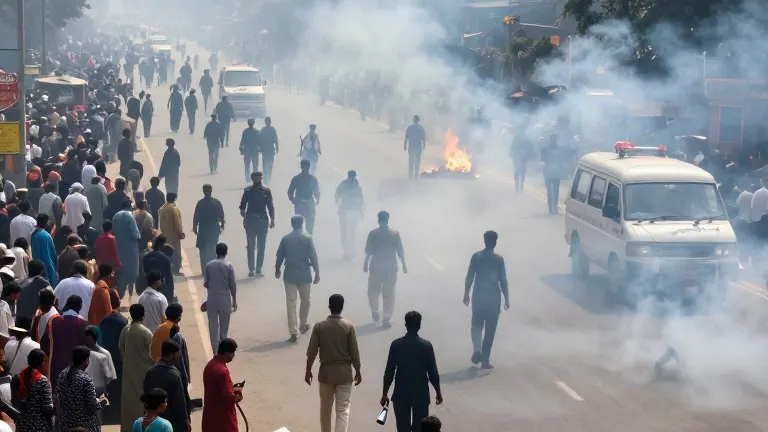
Residents in Bahrain and Kuwait faced renewed air alerts on Wednesday morning as Iran launched a series of attacks against U.S. military facilities in the region. The strikes marked an expansion of hostilities that have intensified over the past week, following a period of relative calm in naval exchanges.
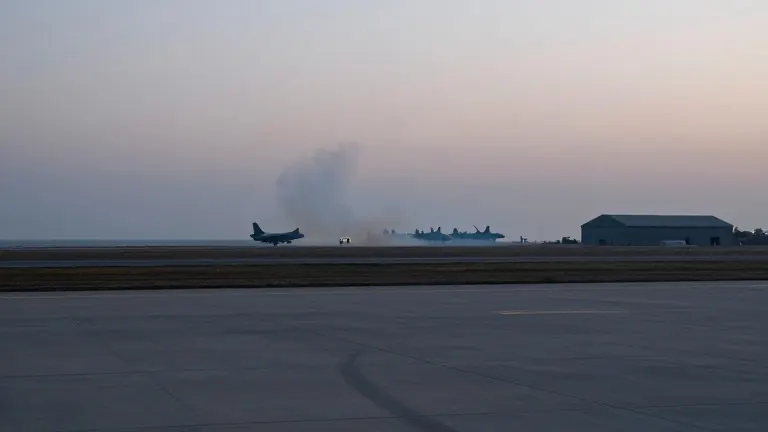
Iranian military officials stated that their forces targeted air defense systems and drone launch platforms at the Ali Al Salem Air Base in Kuwait. Kuwait's Ministry of Foreign Affairs condemned the strikes, labeling them criminal actions that threatened national stability. The Kuwaiti military reported that its air defenses intercepted the incoming drones and missiles, though it did not immediately confirm specific damage to the base.
In Bahrain, the interior ministry issued two early morning shelter-in-place orders before declaring the threat had passed. The country hosts the U.S. Navy's Fifth Fleet. Bahraini forces said they intercepted several attacks from Iran but provided no details on casualties or structural damage. This followed similar strikes on Sunday and Friday, which Iran linked to U.S. drone surveillance operations and attacks on Iranian communication towers.
The Wednesday attacks came after a U.S. fighter jet struck a Revolutionary Guard missile site on Qeshm Island on Tuesday. That strike was a direct response to an earlier Iranian attack on a U.S. radar installation in Bahrain. The sequence of events illustrates a cycle of retaliation between the two powers.
Hamidreza Azizi, a principal Iran analyst at the International Crisis Group, noted that the accumulation of military incidents across multiple fronts increases the risk of miscalculation. He observed that while neither side may seek a wider confrontation, the frequency of engagements makes it harder to control the pace of escalation.
U.S. President Donald Trump has sent mixed signals regarding the next steps, stating that new attacks are unlikely while simultaneously deploying a third aircraft carrier and additional troops to the Middle East. The U.S. military has not yet commented on the latest strikes.
Analyst Danny Citrinowicz of Israel's Institute for National Security Studies described Iran's actions as a deliberate strategy to raise the military and economic costs of the current naval blockade. He argued that Washington faces a dilemma where limited responses may encourage further Iranian aggression, while stronger responses could accelerate the conflict. The blockade, which has disrupted oil shipments through the Strait of Hormuz, remains a central point of tension as Iran continues to challenge shipping lanes.