Shenzhen Summit: Trump, Xi, and Putin Convene
Leaders of the world's top three nuclear powers gather for a rare trilateral meeting amid disputes over Ukraine and arms control.
By Tomas Gonzalez ·
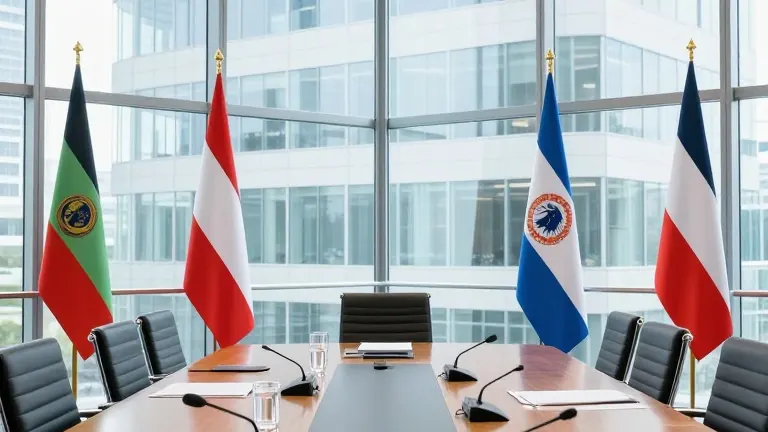
President Donald Trump, Chinese leader Xi Jinping, and Russian President Vladimir Putin will sit together for a trilateral meeting on Thursday. The session will take place on the sidelines of the Asia-Pacific Economic Cooperation summit in Shenzhen, a major technology hub in southern China. This gathering brings together the heads of the states controlling the largest nuclear arsenals, the largest standing armies, and the most extensive manufacturing sectors on the planet.
The timing of the meeting follows the lapse of the New START treaty in February, which had previously served as the final formal agreement between Washington and Moscow on nuclear limits. Trump has stated that he intends to discuss a new arms control deal that includes China alongside Russia. He also listed the war in Iran, global economics, and trade as primary topics. On Monday, he added Ukraine to the list of subjects, referring to it as his favorite topic, despite White House officials saying days earlier that the war would not be on the agenda.
Ali Wyne, a senior adviser for U.S.-China relations at the International Crisis Group, described the meeting as a major shift from post-Cold War policy. For decades, the United States attempted to drive a wedge between Moscow and Beijing. Wyne noted that Trump and Putin are now currying favor with Xi, creating powerful symbolism. He observed that the dynamic has changed, with the two rivals now aligning with the Chinese leader rather than isolating one from the other.
China maintains an estimated nuclear arsenal of 600 warheads. While this number is growing, it remains far smaller than the more than 5,000 warheads held by both the United States and Russia. Craig Singleton, a China expert at the Foundation for Defense of Democracies, said getting Beijing to join real talks on nuclear arms reduction is a long shot. He noted that Trump sees denuclearization as a legacy deal and is betting that his personal relationships can assemble a group of leaders that previous presidents could not bring together.
Moscow has indicated it wants Ukraine on the agenda, even if Ukrainian President Volodymyr Zelenskyy is not at the table. U.S. and Russian officials have pushed for negotiations on Europe's wider security arrangements to be part of any lasting peace settlement. This approach has alarmed long-standing American allies. Zelenskyy said last month that he did not want the process to turn into a series of Yalta conferences, referencing the 1945 meeting where great powers redrew the map of Europe.
Senior U.S. officials told reporters ahead of the trip that the Ukraine war is a separate track from which China is excluded. They argued it would not be appropriate for the three leaders to discuss it. Beijing has similarly signaled reluctance to discuss Ukraine without European leaders present. Wyne said that even if the leaders decide nothing specific on Ukraine, the meeting itself reinforces Kyiv's suspicion that Washington is negotiating with Moscow to the detriment of Ukraine.
China's government described the meeting as having groundbreaking significance, though officials have tried to manage expectations. Da Wei, director of the Center for International Security and Strategy at Tsinghua University, said he did not expect concrete outcomes from the session. He called it a starting point that could promote international stability. He argued that because these three countries are major shapers of the international order, their meeting is beneficial regardless of the specific agreements reached.
The visual image of the three leaders together has drawn comparisons to the Yalta Conference of 1945. In that historical meeting, Franklin D. Roosevelt, Winston Churchill, and Joseph Stalin sat down to divide the postwar world. The current gathering projects a similar sense of power sharing. Allies watching the event worry about their own positions, echoing the sentiment that if you are not at the table, you are on the menu. The leaders will spend the day in Shenzhen, engaging in discussions that observers say could influence global security architecture for years to come.