Massachusetts Rejects Question 7, Keeping Local Lot Size Rules
Voters narrowly defeated a ballot measure that would have allowed single-family homes on lots as small as 5,000 square feet statewide.
By Tomas Gonzalez ·
Massachusetts voters rejected Question 7 on Tuesday, preserving local authority over residential lot sizes. The Associated Press projected the measure failed with 50.7 percent of votes cast against it, based on reporting of 99 percent of ballots.
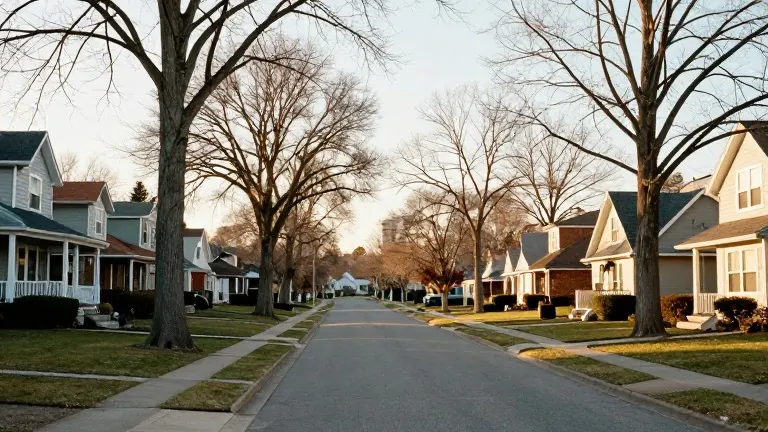
The proposal would have created a statewide standard for the first time. It allowed builders to construct single-family homes on any residentially zoned lot of at least 5,000 square feet. To qualify, the lot required 50 feet of road frontage and connections to water and sewer services. This change would have replaced town-by-town rules that often mandated much larger parcels, such as two acres, for a single house.
Housing advocates argued the measure addressed a severe shortage of starter homes. They noted that builders in recent decades favored larger, more expensive structures, replacing modest post-World War II homes with larger options. The campaign estimated the rule would add between 2,200 and 5,700 new homes annually. Tufts University Center for State Policy Analysis projected a lower figure of 350 to 1,200 homes per year.
Support for the measure split by geography. Boston and surrounding cities generally voted in favor, while wealthier suburbs and smaller towns voted against it. Governor Maura Healey and Boston Mayor Michelle Wu backed the proposal. The Massachusetts Municipal Association opposed it, arguing it eroded local control. Its executive director, Adam Chapdelaine, stated that voters recognized the one-size-fits-all mandate lacked affordability guardrails.
Builders indicated the rule would have been most effective in communities outside wealthy inner-ring suburbs. In areas with lower land costs, such as Newton and Needham, a builder might construct two homes priced at $1.5 million on a lot previously reserved for a single $3 million to $4 million house. In other regions, smaller homes could sell for $1 million or less.
Voters cited confusion over the ballot language and concerns about neighborhood character. Some residents worried the change would lead to excessive development in leafy suburbs. Others questioned whether high construction and land costs would make the new homes truly affordable for working and middle-class families.
The rejection impacts the momentum for broader zoning reforms. Previous state actions, including the 2021 MBTA Communities Act and the 2023 Affordable Homes Act, expanded multifamily and accessory dwelling unit options. Housing advocates, including Kristen Keegan of the Massachusetts Association of Realtors, noted that an estimated 222,000 new homes are needed by 2035. Keegan said the solid support for the ballot question signaled that residents recognize the need for more action to make homeownership attainable.