Trump's $5,000 Dividend Fails as Democrats Sweep Congress
The president's promise to pay adults if Republicans held both chambers is now moot after Democrats won majorities in the House and Senate, raising questions about the campaign's financial logic.
By Julian Schulz ·

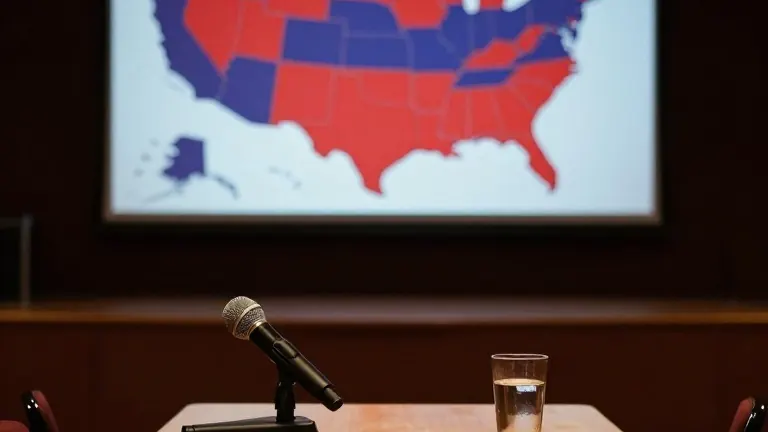
President Donald Trump's pledge to send a $5,000 check to every American adult if Republicans retained control of Congress is effectively off the table following Tuesday's midterm elections. Democrats won majorities in both the U.S. House and the U.S. Senate, a result that voids the specific condition attached to the so-called Trump Dividend. The Republican Midterm Convention in Dallas, where the president made the promise, was the site of a bold fiscal bet that now appears to have lost its legislative backing.
During his nearly two-hour speech in Dallas, Trump told the crowd that if the Republicans won the House of Representatives and the United States Senate, he would issue a dividend to every adult citizen. He described the move as a reward for the country's economic success. The promise was framed as a direct incentive for voters to keep the GOP in power on Capitol Hill. However, with the Republican Party losing control of both chambers, the trigger for the payment has not been met.
House Speaker Mike Johnson, who is now out of office, had stated on Sunday that the proposal required congressional approval. He pledged to work to make the payments happen despite the slim Republican margin. Johnson said he would assume the president needed Congress to act and that it was a creative idea. He committed to finding consensus on the matter. His comments highlighted the procedural hurdles that would have faced the plan had the Republicans held onto their seats.
PolitiFact noted that the $5,000 payment was far from certain even before the election. The fact-checkers pointed out that the White House had announced no formal plan for how the checks would be distributed or funded. Fiscal experts cast doubt on the proposal during a time of existing economic challenges. The payment could cost the federal treasury more than $1 trillion, a figure that would have put significant strain on the national budget.
The U.S. Census Bureau estimates there are about 245 million U.S. citizen adults, meaning the total cost would be roughly $1.2 trillion. Trump cited tariff revenues as a potential funding source, but the One Big Beautiful Bill Act tax and spending bill that became law in 2025 did not include a separate tariff dividend. Erica York, a senior economist at the Tax Foundation, wrote that the cost of the checks would spend almost all the revenue that new tariffs are projected to bring in over a decade.
Bipartisan criticism emerged immediately after the Dallas speech. Texas Congressman Chip Roy wrote on X that dependency is evil and soul-sucking in all its forms. Other Republicans questioned the price tag of such a large payout. Election law expert Rick Hasen from UCLA noted that while the promise is likely legal under the First Amendment as a campaign promise, the president does not have the power to execute it without Congress. He compared it to other common campaign pledges regarding taxes or social programs.
Democrats have long argued that the dividend was an attempt to buy votes with promises that lacked a clear path to implementation. With the new Democratic leadership in place, the focus has shifted to oversight and investigating how the administration planned to fund such a massive expenditure. The new House leadership is preparing to use subpoena powers to probe the financial mechanisms behind the promise. The promise of a $5,000 check has become a central point of discussion in the post-election analysis of the campaign's strategy.
The election results show a clear shift in voter preference, with many citing the cost of living and the war in Iran as key factors. The AP Voter Poll indicated that three-quarters of voters felt the economy was not so good or poor. This sentiment likely contributed to the rejection of a plan that would have added to the national debt. The new Democratic majority is expected to scrutinize the fiscal impact of the proposal and the administration's broader economic policies.
Speaker Johnson's assertion that Congress needed to act underscores the separation of powers that Trump's plan relied upon. By conditioning the payment on a specific electoral outcome, the president tied a major fiscal policy to a political event. Now that the political event has concluded with a change in power, the implementation of the dividend faces an entirely different legislative landscape. The promise remains a talking point, but the mechanism for delivering the checks has disappeared with the Republican majority.
The White House spokesperson Davis Ingle had defended the plan by stating that President Trump has consistently proven his doubters wrong. He drew a contrast with the Democrats' record of historic inflation. However, the loss of both chambers means the new leaders in Congress will have the primary say in any future fiscal initiatives. The $5,000 dividend, once a headline-grabbing promise, now serves as a case study in election-year fiscal proposals.
Voters in key states like Texas and Florida, where the election was closely watched, have moved on to the next phase of governance. The new Democratic leaders are already outlining their agendas, which include investigating the administration's business dealings. The Trump Dividend, while no longer a guaranteed payment, remains a significant element in the narrative of the 2026 midterm cycle. It highlights the tension between political promises and fiscal reality in a divided government.
The end of the Republican hold on Congress means that the specific condition of the Trump Dividend is unmet. Democrats control the House and the Senate, setting the stage for a new era of legislative power. The president's promise, made in Dallas to a cheering crowd, now faces the hurdle of a Democratic-controlled legislature. The cost of the dividend, estimated at over $1 trillion, will be a focal point for the new majority as they begin their terms in January.