57 Million Early Votes: The Ground Game Behind Midterm Turnout
Democratic leaders cite voter anger over costs and war, while Republicans rely on redistricting and massive spending to hold the Senate.
By Nia Foster ·
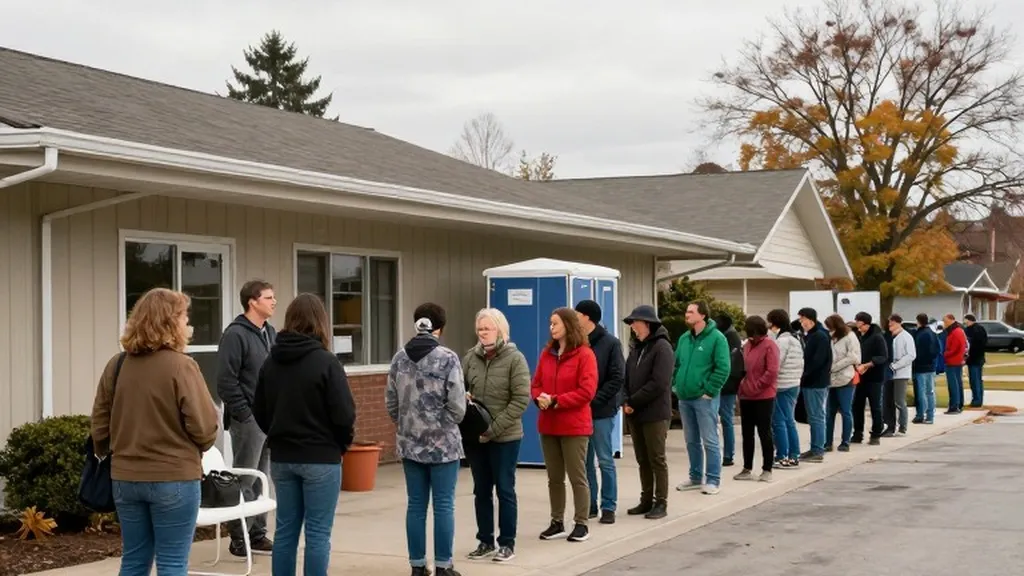
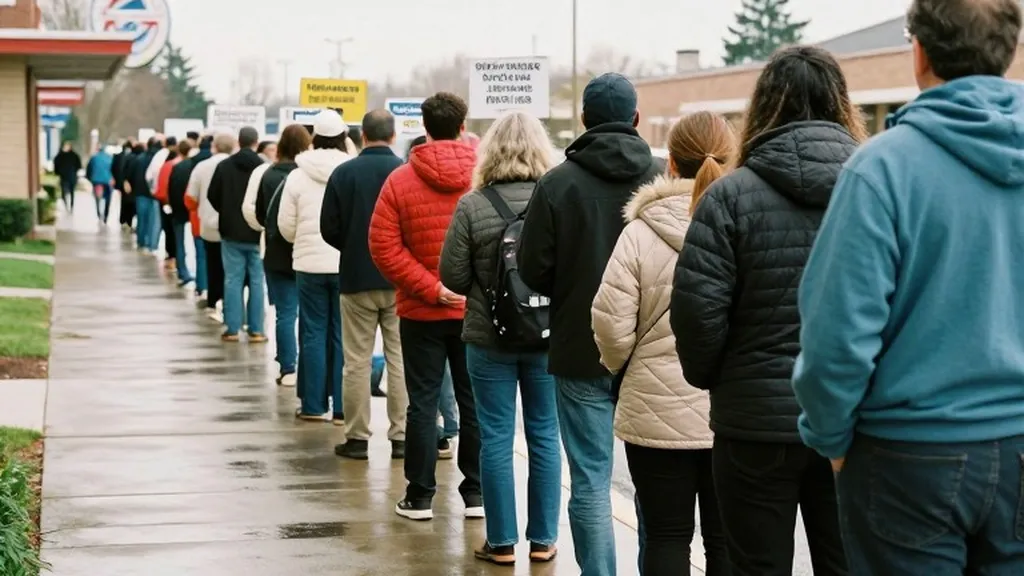
Voters across the United States are casting ballots on Election Day to decide the balance of power in Congress for the final two years of President Donald Trump's second term. With polls open in states from the East Coast to the Pacific, the race is focused on whether Democrats can gain enough seats to control at least one chamber of Congress. The Associated Press reports that more than 57 million people had already voted as of Monday, a figure that surpasses the early vote totals from four years ago in many closely watched states. This surge in early voting is central to the strategies of both parties as they battle for control of the House and Senate.
The mood among voters is defined by economic strain and dissatisfaction with the current administration. According to AP-NORC polling, 35 percent of U.S. adults approve of Trump's job performance, while only 25 percent approve of his handling of the economy. About seven in ten respondents say the country is heading in the wrong direction. Many voters blame the president for high prices, a sentiment echoed by James Moore, a 57-year-old librarian in Raleigh, North Carolina. Moore told the Associated Press that he is paying more for taxes, health care, and other daily necessities, reflecting the cost-of-living concerns that dominate the Democratic platform.
Democratic leaders are framing the election as a referendum on the administration's response to economic challenges and an unpopular war with Iran. Suzan DelBene, the chair of the Democratic Congressional Campaign Committee, stated that the American people are angry and want change. Her party is relying on this anger to drive turnout in key battlegrounds where Democrats need a net gain of three House districts and four Senate seats to achieve majorities. The Democratic ground game is focused on mobilizing voters in states like Georgia, Michigan, and North Carolina, where the margins are tight and the stakes are high.
On the other side, Republican leaders are bracing for the possibility of losing the House while fighting to retain control of the Senate. Joe Gruters, the chair of the Republican National Committee, emphasized that everything depends on turnout. He noted that if Republicans can turn out their voters, they will win, a strategy that has been the focus of their planning for months. The Republican strategy leans heavily on the financial advantages they have accumulated, as their committees have outraised and outspent their Democratic counterparts. This spending was helped by Trump-affiliated groups and billionaire Elon Musk, with 88.1 percent of Republican general election TV ad spending going to states and districts Trump won in 2024.
Redistricting has been a key component of the Republican effort to beat the historical midterm pattern where a president's party loses seats. Six states, including California, Florida, Texas, and Ohio, are using new congressional maps for this election. However, the AP notes that new districts in places like Florida may not vote as drawn, adding uncertainty to the Republican calculations. Despite these efforts, many Republican candidates have kept a distance from the president, who has held dozens of rallies and made claims about voting fraud that have worried Democratic officials.
The ground game in battleground states is intense, with campaigns focusing on specific issues like health care costs and economic stability. In Georgia, Senator Jon Ossoff is facing Republican Representative Mike Collins in a race that the AP describes as a lean to likely Democratic. In Michigan, the open Senate seat is a toss-up or lean Democratic, with Abdul El-Sayed facing Mike Rogers. The AP notes that economic strain and tariffs have made states like Maine competitive, where Senator Susan Collins is facing Troy Jackson. These races are critical for determining which party will hold the gavel in the Senate.
Voters are also weighing the implications of potential Democratic control over the House. If Democrats win even one chamber, investigations and possible impeachment proceedings become likely. House Democratic Leader Hakeem Jeffries has outlined a 100-day agenda focused on the cost of living and oversight of the administration. A strong Democratic night would also boost potential 2028 presidential candidates like Gavin Newsom and JB Pritzker, while potentially complicating the path of Vice President JD Vance. The outcome of these races will shape the political landscape for the next two years.
Election administration has been a point of contention, with federal judges temporarily barring the Trump administration from carrying out plans to prevent noncitizen voting and demanding that California segregate certain ballots. These legal battles have raised concerns about interference and intimidation, as the Justice Department threatens to prosecute local election officials. The U.S. Postal Service has added hours and staff to ensure mail ballots are counted on time, a critical step in a year where mail voting remains prevalent in several states.
As the day progresses, the focus shifts to the turnout numbers that will determine the final count. The Associated Press notes that one or two seats could tip the balance in either chamber, making every vote in the 46 battleground districts and 13 Senate races crucial. The election is not just about who wins, but about the direction of the country in a time of high prices and geopolitical tension. The results will provide a clear signal of how voters feel about the administration's performance and the future of American politics.
The election also has implications for the broader economy, with Wall Street watching for signals on debt ceiling negotiations and AI spending. The outcome of the governor races in 36 states will also determine the balance of power at the state level, with Democrats hoping to hold a majority of governorships for the first time in two decades. As polls close in states from New York to California, the ground game that has defined this election cycle will be tested by the final tally of votes cast.