New Zealand Election Leaves 67-Seat Margin for National Bloc
A surprise seven-seat showing by a new centrist party has complicated government formation, forcing leaders to negotiate with minor factions while waiting for final counts due November 27.
By Tomas Gonzalez ·
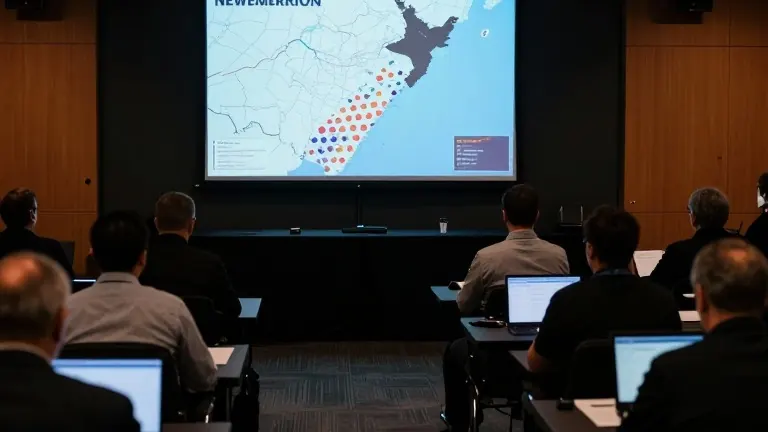
New Zealand voters handed the country a fragmented Parliament on Saturday, leaving Prime Minister Christopher Luxon with a slim majority and no clear mandate for his National party. The center-right bloc holds 67 seats, just one more than the 66 required to govern, while the center-left alliance sits at 57 seats. This narrow gap means both sides must rely on smaller parties to secure a stable government.
The political landscape has shifted away from the traditional two-party dominance. Voters moved their support toward ideological flanks, reducing the influence of the major parties. National won 42 seats through local constituencies but captured only 29.21% of the preferred party vote. Labour, led by Chris Hipkins, secured 36 seats and 29.36% of the party vote, a result that marks another setback for Hipkins after his defeat in 2023.
A new entrant has disrupted the traditional dynamics. Opportunity, a party led by 38-year-old business consultant Qiulae Wong, won seven seats. This is the party's first entry into Parliament after three previous attempts. Wong, who became leader less than a year ago, positions her group as an unaligned centrist force. Her platform emphasizes evidence-based policy and an end to partisan bickering, giving her leverage in upcoming negotiations.
The conservative bloc is anchored by veteran politicians from minor parties. Libertarian ACT won 13 seats, while populist New Zealand First secured 12. These parties will likely extract deeper policy concessions from National in exchange for their support. Critics have pointed to Luxon's dealings with these groups as evidence of his political inexperience, noting that he entered politics in 2020 as a former business executive.
The left-wing bloc has also seen changes in its composition. The Greens, focused on environmental issues, won 16 seats. Te Pāti Māori, an Indigenous rights group, secured five seats. Despite these gains, the left remains short of a majority. Hipkins will likely need the support of Wong's Opportunity party to form a government if the left gains ground in the final counts.
Final results are not yet known. Electoral officials began counting nearly 400,000 special votes on Sunday. This process includes ballots from New Zealanders living abroad and is expected to take three weeks, with final tallies released on November 27. Historically, these votes have granted additional seats to left-wing parties, which could potentially shift the current margin away from the right.
Luxon struck a tone of cautious optimism on Sunday. He did not claim victory immediately but suggested his party has a viable path to a second term. He attributed public dissatisfaction to global economic shocks affecting New Zealand's trade-based economy. He urged the public to take a break from politics during the three-week waiting period. Before the vote, Luxon had ruled out negotiating with Wong, but he sidestepped questions about whether his slim lead had changed his mind.
Saturday was a difficult night for the National party. Several senior lawmakers are set to exit politics, including the ministers of finance and defense, the speaker of parliament, and the attorney general. Luxon now faces a more strident list of policy demands from his traditional governing partners. The total number of lawmakers in Parliament is currently 131. If no government can be formed after negotiations, the nation could face a fresh election.
More World · National news · Report a business · Got a Story?