Europe Joins U.S.-Brokered Ukraine Talks in Abu Dhabi Despite Kremlin Objections
French and other European officials will attend the peace negotiations this week, defying Moscow's insistence on a strictly trilateral format between Washington, Kyiv, and the Kremlin.
By Nia Foster ·

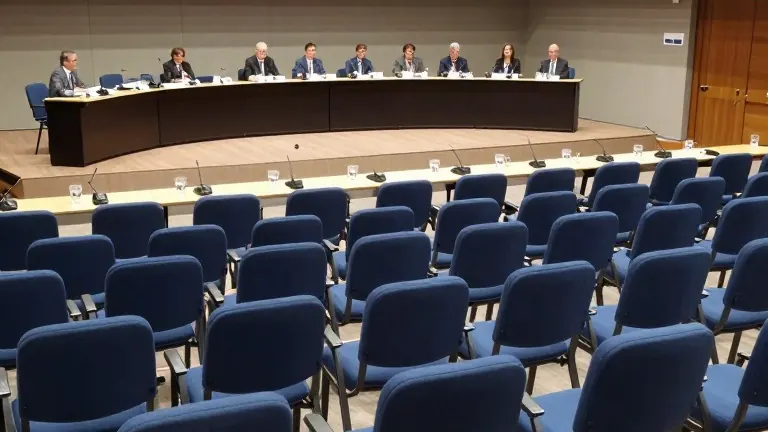
European diplomats are set to attend the next round of U.S.-mediated peace talks in Abu Dhabi, a move that contradicts recent statements from the Kremlin. France’s foreign minister, Jean-Noël Barrot, confirmed the participation on Sunday, stating that Paris would ensure Europe’s voice was heard. The meetings are scheduled for Tuesday and Wednesday at the invitation of the Trump administration.
The Kremlin had previously maintained that the talks should remain a three-way session involving only the United States, Russia, and Ukraine. Spokesman Dmitry Peskov ruled out a European role on Friday, arguing that the trilateral format was already agreed upon. He criticized European governments for failing to designate a single spokesperson, though he acknowledged that security matters would eventually require their involvement.
This will be the fourth round of negotiations brokered by the Trump administration and the first since February. Previous meetings have yielded limited progress, partly due to the administration's focus on its conflict with Iran. Moscow agreed to return to the table only after U.S. envoy Steve Witkoff met with President Vladimir Putin in St. Petersburg in October. That meeting resulted in the release of an American prisoner, which Ukraine viewed as a reciprocal gesture for the lifting of sanctions on Russian diesel exports.
The Russian delegation will again be led by Vladimir Medinsky, a senior aide to Putin who has participated in most talks since March 2022. For the first time, the group includes Deputy Foreign Ministers Sergei Ryabkov and Mikhail Galuzin, along with military intelligence chief Igor Kostyukov. While this senior lineup suggests a readiness to address political and military issues, the Institute for the Study of War notes that some of these officials have previously sought to slow down negotiations or push harder on Moscow’s demands.
Ukrainian President Volodymyr Zelenskyy expressed caution regarding the process. In an interview with CNN, he warned that the situation was not simple and could be dangerous, invoking the 1945 Yalta conference where Allied leaders divided Europe without input from affected nations. The gap between the two sides remains wide, with Russia demanding territorial concessions and a renunciation of NATO membership, while Kyiv insists on clearly defined security commitments.
The talks occur against a backdrop of continued military activity. Zelenskyy reported that Russia fired 36 ballistic missiles at the Kyiv area on Saturday, with only four intercepted. In southern Ukraine, the death toll from a guided-bomb strike on an aid distribution site in Komyshuvakha on Monday rose to at least 55. The meetings also follow Democratic midterm victories, which Zelenskyy said could improve Ukraine's chances of securing more U.S. aid before a new Congress takes office in January.
The upcoming Abu Dhabi talks are also connected to broader diplomatic movements, including a potential trilateral meeting between Trump, Chinese President Xi, and Putin at the APEC summit in Shenzhen later this month. Both sides have confirmed that discussions for that gathering are currently underway.