Shenzhen Summit: U.S. outages complicate Trump's tech push
President Trump arrives for a trilateral meeting with China and Russia while domestic system failures force his administration to explain digital vulnerabilities.
By Julian Schulz ·
The U.S. trade deficit with the Philippines hit $12.8 billion in the first nine months of 2026, a figure that underscores the economic stakes surrounding President Donald Trump's arrival in Shenzhen on Wednesday.
Trump landed in the Chinese tech hub on Wednesday to attend the Asia-Pacific Economic Cooperation summit. His visit aims to position the United States as the leading global technology power. However, a series of technical outages in the United States has complicated the administration's message of stability.
Major U.S. systems experienced disruptions on Tuesday. The issues affected Microsoft, the Federal Aviation Administration, JPMorgan Chase, and the National Security Agency communications network. These failures left Americans worried about accessing email, checking bank accounts, and flying safely.
Secretary of State Marco Rubio addressed the public on Wednesday to manage the narrative. He stated there was zero evidence linking the outages to rival nations, cyber hackers, or criminals. Rubio explained that fixing identified vulnerabilities often creates short-term disruptions during the patching process.
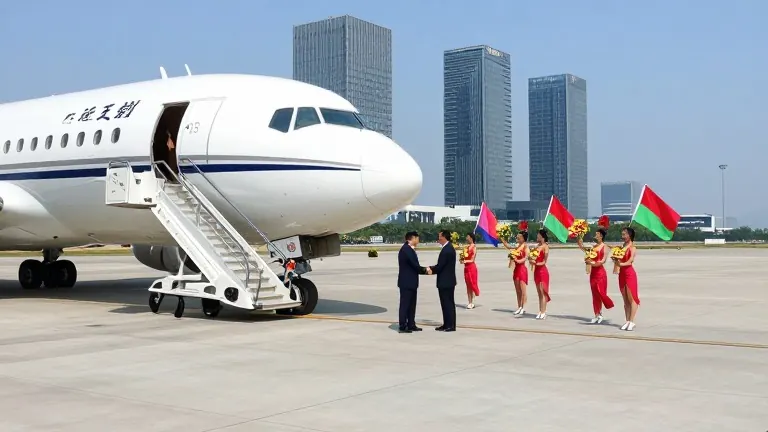
The administration’s defensive posture contrasts with the diplomatic theater in China. President Xi Jinping greeted Trump on the tarmac after Air Force One landed. The two leaders shared a handshake that turned into a hug while dancers waved flowers and flags. This gesture reciprocated a welcome Trump gave Xi during a state visit to Washington in September.
Xi did not offer a similar airport greeting to President Vladimir Putin, who arrived earlier on Wednesday. Trump plans to hold a first-ever trilateral meeting with Xi and Putin on Thursday. The agenda includes discussions on limiting nuclear weapons and ending the war in Ukraine, which began with Russia's invasion in 2022.
Trump told reporters on Tuesday that the conflict is very close to resolution due to high Russian troop losses. He also teased potential private meetings with Putin and North Korean leader Kim Jong Un. Rubio clarified on Wednesday that Trump was serious about meeting Kim but suggested no meeting was currently scheduled for Thursday.
Before reaching Shenzhen, Trump had lunch in Manila with President Ferdinand Marcos Jr. at the Malacañang Presidential Palace. Trump announced that the two nations reached a trade deal on Wednesday, involving Manila purchasing more U.S. energy and farm products. The U.S. trade deficit with the Philippines grew from $4.9 billion in 2024 to $12.8 billion this year, according to the Census Bureau.
Trump also reunited with Imelda Marcos, the 97-year-old former first lady. She appeared to hand him a gift during the visit, according to a White House video. Trump praised the U.S.-Philippines bond and the palace's interior decoration, noting that the two nations share common history, values, and architectural tastes.
Questions about artificial intelligence and chip access loom over the summit. Jensen Huang, a close tech ally of Trump, was recently removed as Nvidia CEO after admitting an affair with a woman alleged to be a Chinese agent. Beijing denied she was a spy, but the incident raised concerns about China's access to U.S. chips for AI development. Trump said he does not plan to raise Taiwan's sovereignty, though he expects Xi will bring it up.