The $900 Billion AI Gamble: Anthropic's Massive Debt and the Nvidia Hugging Face Deal
As Anthropic heads toward a massive public offering, its staggering infrastructure commitments and Nvidia's strategic acquisition of a key developer hub raise urgent questions about the sustainability of the current AI boom.
By Tomas Gonzalez ·
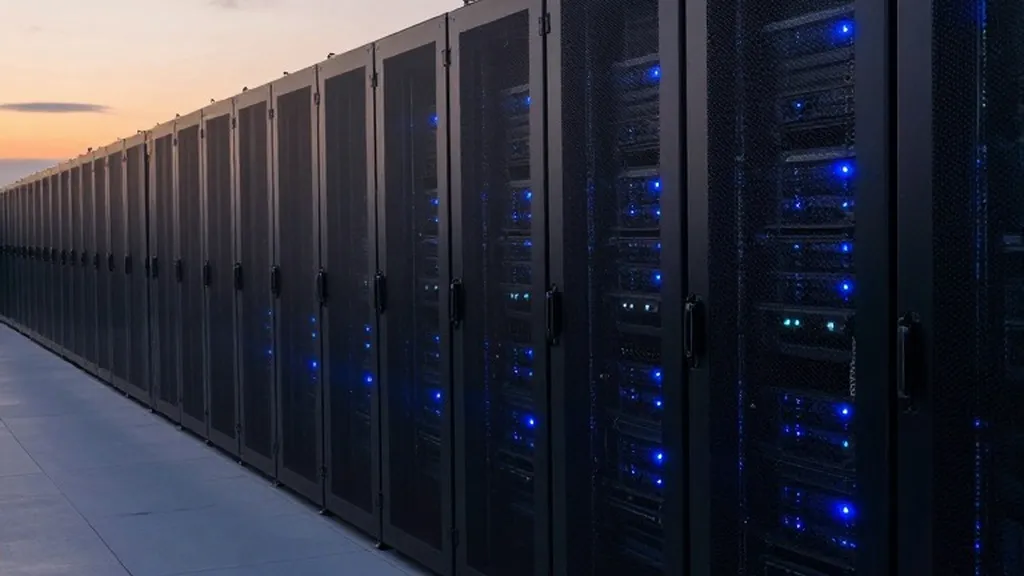
Wall Street has long sold the narrative that artificial intelligence represents the greatest investment opportunity of our era. While the technology is undeniably powerful, a closer look at the financial disclosures of leading firms reveals a more complex reality. The industry is currently characterized by astronomical spending on infrastructure, intense competition over hardware supply, and a growing divide between proprietary services and open alternatives. At the heart of this tension is Anthropic, the company behind the Claude model, which is preparing for what could be one of the largest initial public offerings in history.
Early expectations for Anthropic’s valuation reached as high as $2 trillion. However, the company’s IPO pricing proposal for November 10 points to a figure between $1.3 trillion and $1.4 trillion. This is still an extraordinary sum, but it prompts a necessary question for investors and users alike. What exactly are they paying for? The answer lies in the sheer scale of Anthropic’s financial obligations and the structural dynamics of the AI market.
According to recent securities disclosures, Anthropic has approximately $900.9 billion in purchase commitments and lease agreements, primarily related to computing infrastructure. This figure is not a speculative projection but a contractual obligation. The breakdown of these costs is significant. Approximately $451.6 billion is expected to be incurred before the end of 2030, with the remainder stretching out through 2045. In the nearer term, about $70.7 billion is due within the 12 months following September 30, 2026.
It is important to distinguish these commitments from existing debt. Anthropic is not currently $500 billion in debt, and the company has disclosed substantial liquidity and financing arrangements. Nevertheless, the future financial obligation is immense. The company’s revenue is growing rapidly, with an October annualized revenue run rate reportedly reaching approximately $81 billion. This far exceeds the less than $20 billion figure often cited in broader discussions. However, annualized revenue is not profit. It does not account for the costs of computing, research, personnel, electricity, and maintenance. Even if Anthropic reaches $100 billion in annual revenue, it must still cover these operational expenses. A trillion-dollar valuation relies on the belief that the company will generate extraordinary profits over many years. That belief may prove correct, but it is not yet a guarantee.
To understand the economics, consider the cost of the hardware itself. A single Nvidia RTX PRO 6000-class GPU can cost approximately $20,000 at retail. In a hypothetical scenario, this GPU might serve 15 to 20 light users, generating 60 to 70 tokens per second, or one or two intensive coding users at 40 to 50 tokens per second. If 20 light users pay $20 monthly, the total subscription revenue is $400. At that rate, recovering the $20,000 cost of the GPU alone would take 50 months. This calculation assumes every dollar of revenue goes toward the hardware, ignoring servers, cooling, electricity, and labor.
Even if the wholesale cost of the accelerator is lower, the math remains challenging. If a GPU costs $4,000, the break-even point for $400 in monthly revenue is 10 months. At $3,000, it is 7.5 months. These are hypothetical figures, but they illustrate the pressure on margins. The counterargument is that most users do not run AI continuously, allowing hardware to serve a larger base. However, intensive coding agents consume significant resources. The critical metric is not just customer count, but the contribution profit each customer generates after serving costs. Until unit economics are clear, high valuations warrant close scrutiny.
Nvidia stands to benefit regardless of which AI model dominates the market. The industry requires massive quantities of accelerators and high-bandwidth memory. When demand exceeds manufacturing capacity, prices rise. Large tech companies can reserve capacity years in advance, while smaller developers struggle to compete. This creates an unequal marketplace where financial scale dictates access to computing power. Nvidia benefits from this scarcity, even if it does not intentionally manipulate supply. The situation becomes more complex when considering the company’s recent strategic moves.
In September 2026, Nvidia announced an agreement to acquire Hugging Face for approximately $12.93 billion. The deal includes an equity-based employee retention component and is expected to close in 2027, subject to regulatory approval. Hugging Face is a central hub for the open-model ecosystem, where millions of developers discover and distribute machine learning models. Nvidia already dominates the accelerator space with its CUDA software platform. By acquiring a major distribution platform, Nvidia is moving to control how developers find and deploy models.
Nvidia states that Hugging Face will remain open and that developers will retain freedom of choice. However, these promises require enforceable safeguards. Questions remain about whether competing hardware manufacturers will receive fair access and whether the platform will remain neutral toward models that reduce demand for proprietary infrastructure. These are legitimate competition policy questions that deserve regulatory attention.
Meanwhile, the rise of open-weight models threatens the proprietary business model. Projects from DeepSeek, Alibaba’s Qwen, Moonshot AI’s Kimi, and others have shown that advanced AI does not need to be locked behind a subscription. These models can be downloaded, adapted, and run on private infrastructure. This accessibility changes the economic landscape. A developer can run an open model on rented hardware, and a business can deploy a coding assistant internally without paying API fees. If a capable alternative runs locally, the value of a $200 monthly subscription diminishes. The technology is improving, but the ability to charge premium prices may not keep pace.
Quantization plays a key role in this shift. It reduces the precision of model weights, allowing large models to run on less memory. A model with 200 billion parameters requires about 400 GB at 16-bit precision, but only 100 GB at 4-bit precision. This makes advanced AI practical on cheaper equipment. It does not mean open models match proprietary frontier models in every task, but it provides developers with more choices. This diversity is essential for a competitive market.
Concerns have arisen about platform neutrality. Some allege that hosting platforms restrict quantized models to protect proprietary services. While specific evidence of a blanket ban on 4-bit, 6-bit, 8-bit, or 16-bit models has not been established, the distinction matters. Removing a model for copyright or malware issues is different from suppressing lawful competing models. A project called Pirate Face has emerged to support independent distribution, indexing Hugging Face models and recording checksums. It illustrates a growing need for decentralized distribution to reduce dependence on single corporate platforms.