Trump's $5,000 pledge now moot as Democrats take Congress
The 'Trump Dividend' promised in Dallas was contingent on GOP control of both chambers, a condition that has now failed amid bipartisan skepticism over the plan's funding.
By Tomas Gonzalez ·

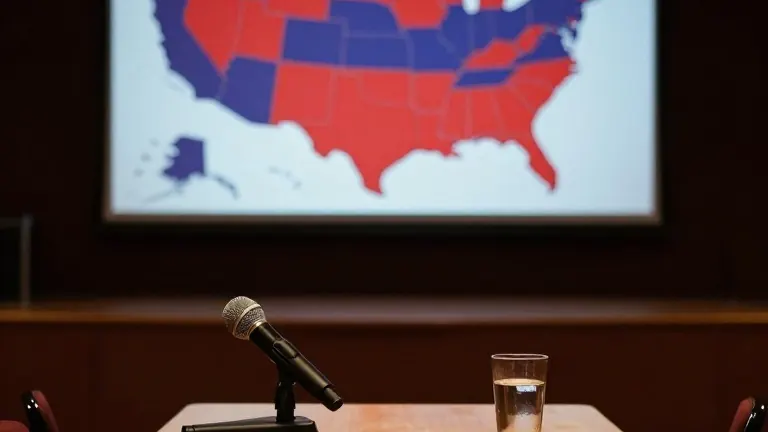
Voters across the nation cast ballots on Tuesday in a midterm election that has resulted in a decisive shift in power in Washington. The Associated Press reported that Democrats have secured control of both the U.S. House of Representatives and the U.S. Senate, delivering a rebuke to the Republican Party and President Donald Trump. This outcome has immediate implications for a major campaign promise made by the President just days before the election.
In Dallas last week, President Trump addressed the Republican Midterm Convention and pledged to send $5,000 to every adult U.S. citizen. He branded this payment the 'Trump Dividend,' explicitly tying the disbursement to the GOP’s electoral success. The President stated that if Republicans won control of both the House and the Senate, the checks would follow. This conditional offer was a central theme of the President’s final campaign appearances in heavily Republican states.
The promise was not without immediate scrutiny. House Speaker Mike Johnson, a key figure in the President’s legislative strategy, stated on Sunday that the proposal would require congressional approval. Johnson told reporters that he assumed the President would need Congress to act, calling it a creative idea. He pledged to work through the details to find consensus, acknowledging the complexity of implementing such a large-scale payment with a slim Republican majority.
Despite the Speaker’s confirmation of the legislative hurdle, President Trump initially suggested the process might be simpler. In a later interview, he indicated he did not think Congress would need to formally authorize the payments, though he did not specify the mechanism for spending more than $1 trillion without lawmakers’ sign-off. The President later reiterated his confidence, telling reporters in Ireland that the $5,000 payment was going to happen 100%.
PolitiFact analyzed the proposal and found that the largest payment was far from certain. The fact-checkers noted that the administration had not announced a formal plan for how the checks would be distributed. While the President cited tariff revenues as a potential funding source, the One Big Beautiful Bill Act tax and spending law did not include a separate tariff dividend. PolitiFact highlighted that the payment could cost the federal treasury more than $1 trillion, a sum that would strain a budget already facing a nearly $1.8 trillion annual deficit.
Bipartisan criticism emerged quickly after the announcement. Some Republicans questioned the price tag, with Texas Congressman Chip Roy writing on social media that dependency is evil and soul-sucking in all its forms. Democrats argued that the pledge was an attempt to buy votes, leveraging the President’s economic rhetoric to sway undecided voters. The potential payout raised questions about fiscal responsibility, particularly given the persistent inflation and rising interest rates that have affected consumer sentiment throughout the year.
Election law expert Rick Hasen of the UCLA School of Law noted that while the promise is likely legal under the First Amendment, it is not a guarantee. Hasen explained that campaign promises are constitutionally protected, similar to pledges to cut taxes or expand healthcare. However, he emphasized that the President does not have the power to issue the checks on his own; Congress must pass the necessary legislation to authorize the spending. This legal clarity underscored the practical obstacles the proposal faced even before Tuesday’s votes were counted.
The economic backdrop for the 'Trump Dividend' was contentious. The President argued that the strong economy, driven by high revenue from tariffs, made the payments easy to handle. He claimed the nation was taking in $21 trillion, a figure he said was four or five times higher than any other country. However, consumer prices rose 3.6% in September from a year earlier, according to the Commerce Department, and many voters reported that inflation had caused severe financial hardship for their households.
Vice President JD Vance indicated that some of the money for the checks would come from tariff revenue. The Tax Foundation, however, published analysis suggesting that U.S. tariff revenue would not be able to cover the cost of the dividend. Erica York, a senior economist at the Tax Foundation, wrote that the cost of the $5,000 checks would spend almost all the revenue that the new tariffs are projected to bring in over a decade. She described the new pledge as not going to happen, given the previous failure to deliver on similar $2,000 tariff dividend promises from the prior year.
With Democrats now holding the majority in both chambers, the original condition for the 'Trump Dividend' has not been met. The President’s pledge was explicitly contingent on Republicans keeping Congress. As the new congressional leadership prepares to take office in January, the fate of the $5,000 checks remains uncertain. The shift in power means that the legislative path to funding the payment now faces a Democratic majority that has already signaled its intention to scrutinize the administration’s fiscal policies and spending priorities.
The result in the Senate was particularly significant for the proposal. Democrats gained a net of four seats, securing a 51-49 majority that allows them to block or shape new spending bills. In the House, the Democratic gain of 27 seats provides a stronger check on the President’s agenda. These structural changes mean that any attempt by the President to deliver the promised dividend will require new negotiations with a Congress that was elected partly in opposition to his economic management.
President Trump’s approval ratings had dropped to one-third of U.S. adults by July, according to a poll from the Associated Press-NORC Center for Public Affairs Research. Majorities of voters disapproved of his handling of the economy and immigration, issues that were central to the midterm debate. The 'Trump Dividend' was one of several attempts by the administration to address these concerns, alongside smaller payments for Medicare enrollees and Affordable Care Act participants. The larger $5,000 check, however, remains the most prominent and the most dependent on the political alignment that has just shifted.