Leaders gather in Shenzhen as fears of a new Yalta summit grow
Ukraine and other excluded nations worry that a trilateral meeting between Trump, Xi, and Putin in China will reshape the global order without their input.
By Julian Schulz ·

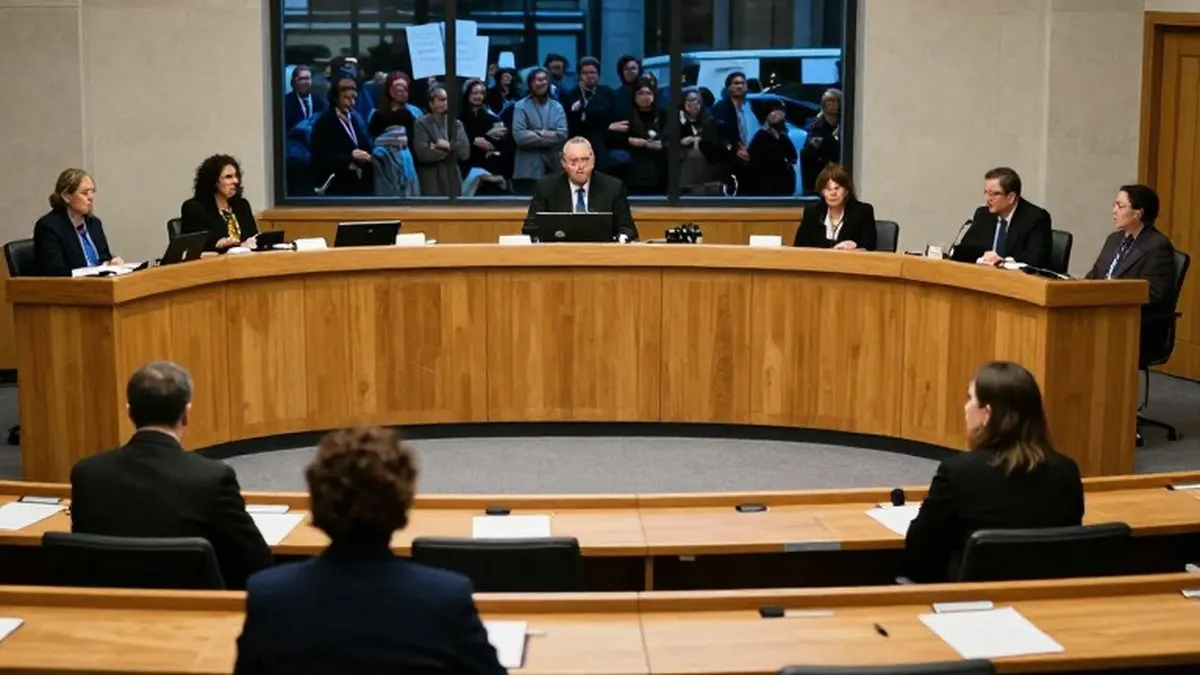
Ukrainian President Volodymyr Zelenskyy has voiced concern that a trilateral meeting between Donald Trump, Xi Jinping, and Vladimir Putin could mark a Yalta 2.0 moment. The three leaders are expected to meet on the sidelines of the Apec summit in Shenzhen, China, next week. This anticipated gathering has raised alarms among nations not invited to the table, including Ukraine, several Eastern European and Baltic states, Taiwan, and Iran.
In diplomatic circles, there is a common fear that if a country is not present during high-level negotiations, its interests may be compromised. These excluded nations are nervous that their sponsors might make complex geopolitical trade-offs that prioritize the agendas of Putin and Trump. Russia has long sought to re-enact the spirit of the 1945 Yalta conference, which was held in a resort in Crimea under the direction of Joseph Stalin.
The dynamic of the upcoming meeting appears to cast Trump as an enthusiastic participant while Xi acts as a hesitant host. China is currently trying to keep nuclear disarmament off the agenda, and it is unclear how much substantive dialogue will occur beyond protocol-driven statements. Some analysts suggest the event may serve primarily as geopolitical theatre, allowing Putin to demonstrate that Russia remains a major player despite having an economy significantly smaller than the European Union.
Russian officials have framed the potential outcome as a new security architecture. Vladimir Medinsky, Russia’s chief negotiator, stated on television that the goal is to create a comprehensive security system in Europe that serves as a modern Yalta or Potsdam. He argued that such a system could ensure peace for decades or even centuries. Maria Zakharova, the foreign ministry spokesperson, described the summit as a potential start to stabilizing a world that has been sliding into chaos.
The original 1945 Yalta conference is often remembered outside of Russia as a moment of cynical compromise. Franklin D. Roosevelt agreed to Russian presence in Poland in exchange for support in the war against Japan and for the creation of a new international organization. Although a declaration affirmed sovereign rights, Stalin’s subsequent actions suggested a different intent. Churchill’s attempts to appeal to honor were met with Stalin’s assertion that the issue was a matter of life and death.
The sense of betrayal associated with Yalta has historically been strong in the United States. In 2005, President George W. Bush criticized the 1945 agreement for consigning millions to communist captivity. However, the Republican tradition of viewing Yalta negatively has been altered by Trump, who praised the sphere of influence geopolitics in his 2025 national security document. He identified the western hemisphere as America’s domain while remaining deferential to the spheres of Russia and China.
China’s role in the current diplomatic landscape is complex. The country is wary of using its leverage to help the United States or to act in ways that contradict its narrative of stability. Professor Minghao Zhao of Fudan University noted that China is managing the consequences of strategic mistakes made by both Russia and the United States. Dr. Wang Huiyao, who advocated for the trilateral summit, argued that China is needed to prop up multilateralism and avoid a period of global chaos known as the Kindleberger trap.
While China may help resolve issues in the Middle East to secure oil routes, it views Ukraine primarily as a European security issue. Beijing is reluctant to betray Putin but is also cautious about endorsing a settlement without European agreement, especially while repairing trade relations with Europe after a period of industrial overcapacity. For some theorists, the sight of the US president negotiating with autocrats is troubling, but others believe it is necessary for the future.
Charles Kupchan of the Council on Foreign Relations argues that the era of preponderant democratic coalitions is ending. He suggests that the US and its allies must learn to work across ideological lines with rising powers like China, India, and Indonesia. While there are risks of compromise, Kupchan believes that starting these conversations is essential, offering credit to President Trump for initiating this new diplomatic phase.