I-495 Southside project to add 4 lanes each way on Wilson Bridge
Virginia officials propose a new highway design that reserves space for future rail while narrowing emergency lanes to 3 feet.
By Julian Schulz ·
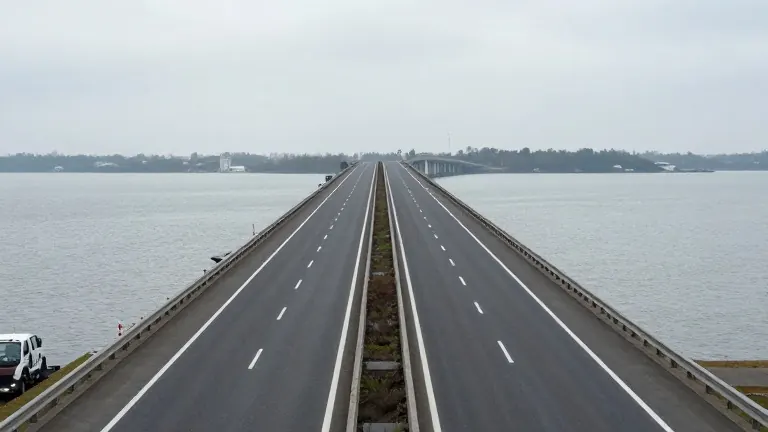
Drivers in Northern Virginia could soon see a redesigned highway corridor that adds two express lanes and four general purpose lanes in each direction across the Woodrow Wilson Bridge. Virginia Secretary of Transportation Nick Donohue presented this new plan to the Transportation Planning Board on Oct. 21, aiming to win regional support for the 11 mile I-495 Southside project.
The design changes how vehicles handle emergencies on the bridge. To make room for future Metrorail tracks in the center of the structure, the new proposal narrows the breakdown lanes to just a few feet. This makes the lanes unusable for vehicles with mechanical issues. To compensate, the plan requires tow trucks to be stationed on both sides of the bridge at all times to remove stuck cars.
Donohue addressed concerns about traffic spilling onto local roads in Alexandria, Fairfax County, and Prince George’s County. He stated that the administration is committed to reducing these negative impacts and acquiring the necessary right of way. He emphasized that this process is a collaboration, distinct from the approach taken under the previous administration, which regional leaders criticized for not addressing transit and traffic concerns adequately.
Maryland officials expressed cautious optimism about the revised approach. Joe McAndrew, Maryland’s assistant secretary of transportation, thanked the Virginia team for their engagement but noted that more progress is needed. Rockville Mayor Monique Ashton stressed the importance of getting commitments in writing to ensure stability, while Prince George’s Council member Eric Olson said public engagement must remain front and center for local communities.
The project faces a tight timeline due to the current administration’s term ending in January 2030. Donohue warned that a plan must be approved within that window to avoid being reversed by a successor. The Transportation Planning Board’s staff director, Kanti Srikanth, outlined the next steps: an air quality analysis must be completed by early February to allow for a public review period and a final vote in March 2027.
Sen. Jennifer Boysko, D 38, said the new revision gives her hope, while Alexandria Council member Canek Aguirre noted the direction has changed but the relationship must continue to build. If the region approves the plan early next year, Donohue expects construction to begin in late 2029 or early 2030. Virginia officials plan to hold public information meetings on both sides of the Potomac before the end of the year, though specific dates have not yet been set.
Source: ALXnow