Israelis Vote on Tuesday in Election Defining Post-War Direction
Voters choose between the incumbent government and a right-leaning opposition bloc amid ongoing conflict and political polarization.
By Nia Foster ·
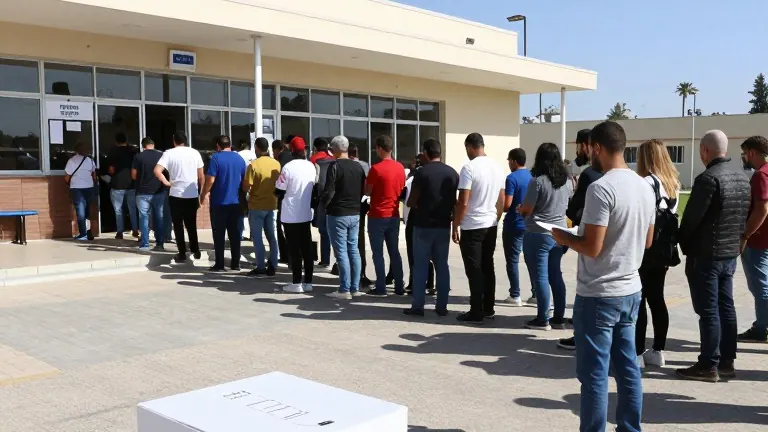
Israelis cast ballots on Tuesday in a tight race that pits Prime Minister Benjamin Netanyahu’s right-wing coalition against an opposition bloc that has also shifted significantly to the right. The election marks the first national vote since the October 7, 2023 attack by Hamas and the subsequent war in Gaza, which has resulted in the death of more than 74,000 people.
The political center has eroded over the past two decades following the collapse of the peace process and repeated security crises. This trend accelerated under Netanyahu’s current government, formed in 2022. Analysts note that the coalition has sought to reshape the state’s institutions, including attempts to limit the power of the Supreme Court and disputes over military conscription for the ultra-Orthodox minority.
Netanyahu, who faces an ongoing corruption trial for charges of bribery, fraud, and breach of trust, is seeking to extend his tenure as Israel’s longest-serving prime minister. He is also wanted by the International Criminal Court on war crimes charges related to Gaza. His opponents describe themselves as a Zionist alternative but have largely embraced a right-wing approach to domestic and foreign policy.
The campaign focused heavily on accountability for the security failures preceding October 7 and the role of ultra-Orthodox parties in the government. Key figures in the current cabinet, including National Security Minister Itamar Ben-Gvir and Finance Minister Bezalel Smotrich, provided support for judicial reforms and increased military activity in the West Bank. Their political support helped sustain the coalition that launched the judicial overhaul in early 2023.
Ahron Bregman, a senior teaching fellow at King’s College London, noted that a change in leadership would alter the political atmosphere more than the fundamental direction of policy. He described Netanyahu as a deeply divisive figure who inspires intense admiration or hatred among Israelis. Bregman cautioned that any new government would still reflect the sharp rightward turn in Israeli society that occurred after the 2023 attacks.
Yossi Mekelberg, a senior fellow at Chatham House, framed the election as a choice between a functioning democracy and one that exists in name only. He also described it as a decision between maintaining the occupation of the West Bank or moving toward full annexation, a path suggested by some government figures. He emphasized that the vote determines the character of the state’s governance.
Sociologist Yehouda Shenhav-Shahrabani argued that the political system operates within a framework of Jewish supremacy. He stated that no leader presenting an alternative to Netanyahu can be described as left-wing. According to him, the current political reality is rooted in Zionist political thought rather than being solely the product of the current prime minister or the far right.
Arab-led parties, which represent one-fifth of Israel’s population, are expected to be excluded from any governing coalition by both major blocs. Former Israeli government adviser Daniel Levy said the election is not a referendum on the war in Gaza because no mainstream candidate has proposed a coalition with Arab-led parties. He noted that the treatment of Palestinians is a consensus among Zionist parties, with differences lying in who should enforce that treatment.
The election results will determine whether the current government remains in power or if a new administration is formed to lead the country through its ongoing conflicts and internal political divisions.
Source: Al Jazeera