New data reveals a messy political middle that defies the two-party narrative
Pew Research Center estimates that 60% of the American electorate falls into a centrist group, challenging the widespread belief in deep ideological divides.
By Tomas Gonzalez ·
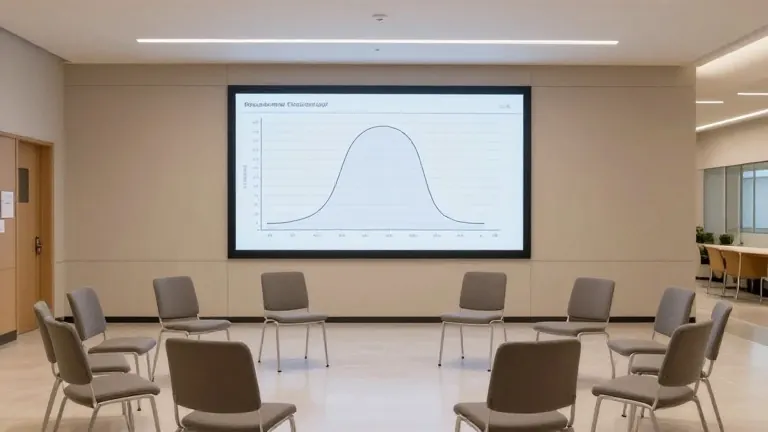
Pew Research Center estimates that approximately 60% of the U.S. electorate belongs to a messy political middle. This finding suggests that the nation is not split evenly into two distinct camps, as is commonly assumed. The data challenges the prevailing view that polarization is absolute and total.
The center is composed of individuals who share values across traditional partisan lines. Pew researchers identified nine distinct groups based on attitudes and values. One such group, labeled the Pragmatic and Polite Right, includes 56% Republicans or Republican-leaning voters and 37% Democrats or Democratic-leaning voters. This group values civility and holds conservative economic views while maintaining moderate stances on race and immigration.
Kristin Laurin, a psychology professor at the University of British Columbia, notes that personal interactions often contradict statistical assumptions. She pointed to a recent exchange between two friends, Shanna Berry and Alma Ong, as evidence of this gap. Berry, a Trump supporter, and Ong, a liberal, initially avoided discussing politics to preserve their friendship.
When asked about the U.S. capture of Venezuelan President Nicolas Maduro in January, Berry described the move as necessary. She expressed some doubt about the legalities and the oil interests involved but noted that many Venezuelans were happy. Ong, who usually disagrees with Berry on most issues, was surprised by this alignment. Ong stated that she agreed with everything Berry said, a reaction Laurin said is typical in her research.
Laurin explains that people often avoid political conversation to prevent conflict. This silence leads them to overestimate their differences. She attributes part of the perception gap to political elites and social media. Elites portray opponents as extreme to energize their base, while algorithms amplify rage to drive engagement. Laurin asserts that perceived polarization far exceeds actual polarization.
Stan Fletcher, a restaurateur in Maryland, offers a similar perspective from the ground. Fletcher, a three-time Trump voter, supports former FBI Director James Comey’s First Amendment rights. Comey was indicted in April for posting a photo of seashells that the Department of Justice claimed was a death threat. Fletcher argued that no one should be indicted for an opinion. He believes 95% of Americans are moderates, though he hears the voices of extremists on both sides.
Jocelyn Kiley, who leads politics research at Pew, emphasizes the variation within parties. She noted that looking beneath party labels reveals significant overlap. The ideological extremes, including the No Apologies Right and Faith First Conservatives, make up only 21% of the population. Kiley acknowledges that political division is real but argues that there is substantial nuance beneath the surface. Pew has released a quiz to help individuals identify their specific political group.
The research indicates that the messy middle is larger than the ideological fringes. This structural reality persists despite the loud rhetoric of the political elite. The data provides a framework for understanding why many Americans feel out of step with the national conversation.
Source: Delaware Public Media