US Midterm Winners Signal New Regulatory Pressure on AI Data Centres
Polls show 76% of voters oppose local data centres, and new Democratic leaders in key AI states are pushing for cost-sharing mandates and construction controls.
By Nia Foster ·
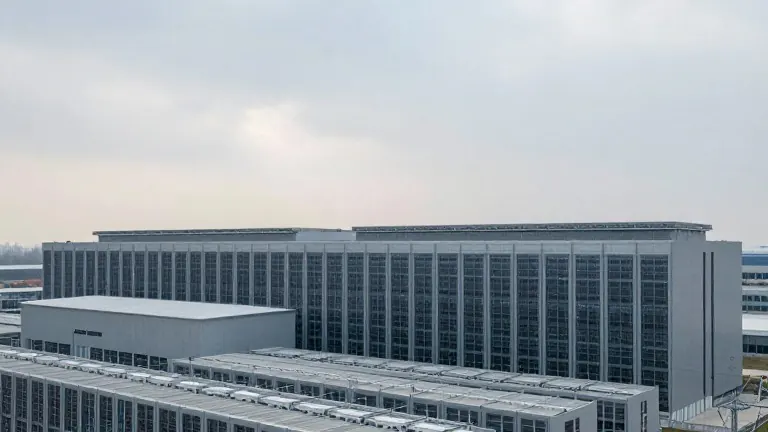
Democratic leaders elected in Texas, Georgia, and Ohio are moving to impose stricter rules on the rapid expansion of data centres, a shift that could alter the economics of the US artificial intelligence buildout. These states now have governors and senators who have publicly advocated for conditions on new infrastructure, ranging from construction bans to mandatory utility cost coverage.
The political pressure stems from a surge in voter dissatisfaction. A poll conducted by the Associated Press and a consortium of news organisations around the November 2026 midterms found that 56% of surveyed voters identified data centres as a crucial or major factor in their voting decisions. In that same survey, 76% stated they would oppose a new facility being built in their community. Sentiment was even more negative among voters who identified as Democrats.
This opposition aligns with earlier data from Pew Research, which indicated that roughly half of Americans view data centres as mostly bad for the environment, energy costs, and quality of life. That perception has worsened since January. However, data centres ranked lower than other top concerns in the AP poll. Government corruption cited by 90% of voters and the cost of living cited by 89% remained the dominant issues.
The correlation between data centre presence and electoral shifts is visible in the three Senate seats that flipped to the Democrats. Texas, Ohio, and Iowa, which won Democratic senators, all have data centre counts well above the national median of 55. Texas leads the nation with 595 centres, Ohio has 258, and Iowa has 117. Texas alone is currently constructing 31 new projects, more than any other state.
Despite the high number of facilities, BBC Verify analysis of state-level polling suggests that the states that swung Democratic tracked national trends on data centre concerns or appeared less worried than other regions. This makes it difficult to quantify exactly how many votes were secured specifically due to data centre opposition. The issue functioned as a background current rather than a single decisive factor in every district.
The incoming leaders in the three states central to the AI buildout have outlined specific regulatory proposals. These measures include temporary bans on new construction, the elimination of tax breaks, and requirements that operators fully cover the costs of their own energy and water infrastructure. Other proposals mandate the use of unionised construction workers, impose stricter environmental safeguards, and grant local communities veto rights over new projects.
The financial stakes are high because corporate investment in AI has been a major driver of US economic growth. Official data shows that inflation-adjusted monthly spending on data centre construction, excluding IT hardware, reached $5 billion in August 2026. This figure is five times the level recorded in 2023. Columbia Business School analysis suggests that AI infrastructure investment now represents a larger share of the US economy than railway spending did at the peak of the 19th Century boom.
Industry analysts are divided on the impact of these new political realities. Seema Shah of Principal Asset Management warned that demands for developers to fund grid upgrades and meet tougher water standards could raise development costs and slow new supply. In contrast, Heather West of the Eurasia Group noted that projects already permitted or under construction will largely proceed. She predicted that the next wave of building will face slower permitting and local fights over costs.
Oxford Economics analysts pointed out that tax revenue and construction jobs give politicians strong incentives to avoid overly disruptive policies. Deepak Surana of the Futurum Group predicted a negotiation process rather than a full moratorium, aimed at protecting residents' utility bills. The industry itself is already reacting to the new political climate. OpenAI, which operates a facility in Texas and has projects in Ohio, pledged on November 5 to fully cover the cost of its own electricity.
The immediate next step involves state legislatures and executive offices in Texas, Georgia, and Ohio drafting the specific regulations that their new leaders have proposed. The outcome will determine whether the current pace of $5 billion monthly construction spending continues or slows as developers adjust to the new requirements for cost transparency and community approval.
More Business · World news · Consumer Watch · Report a business · Got a Story?