Maryland landowners take power line dispute to Supreme Court
Opponents of a $424 million transmission line ask the justices to review a ruling that allowed a developer to survey their properties without consent.
By Nia Foster ·
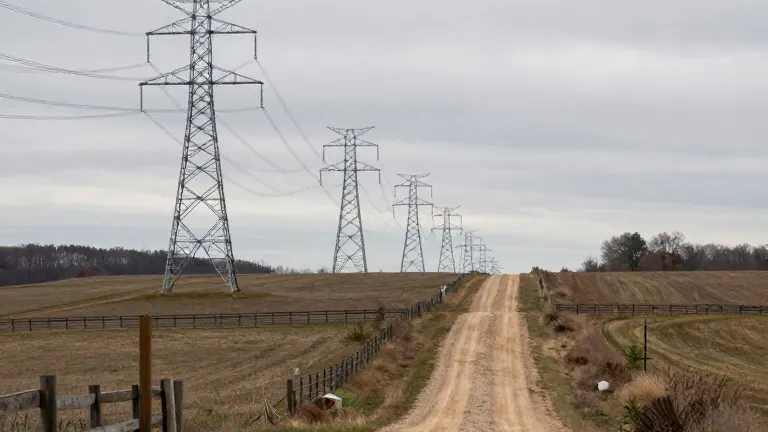
A coalition of Maryland property owners filed a petition with the U.S. Supreme Court on Thursday, requesting a review of their legal battle over the Maryland Piedmont Reliability Project. The group seeks a ruling on whether the project developer, Public Service Enterprise Group, had the legal standing to conduct surveys on non-consenting land during the permitting phase.
The dispute centers on a 67-mile transmission line planned for Baltimore, Carroll, and Frederick counties. The $424 million infrastructure project aims to transport electricity from Pennsylvania to Northern Virginia. The route crosses approximately 400 properties, many of which belong to residents who have not agreed to the construction.
The legal conflict began when a federal judge ruled that PSEG could proceed with surveys on landowners who objected. The Fourth Circuit Court of Appeals upheld that decision in August, reinforcing the lower court's stance. The appeals court determined that PSEG likely held the authority to force access to the properties under the power of eminent domain.
The landowners' petition argues that this interpretation creates a conflict among federal appeals courts. They contend that PSEG, as a new entrant to the Maryland market, had not yet received final approval to invoke eminent domain. The filing suggests that allowing the surveys before final authorization violates the fundamental right of property owners to control access to their land.
Joanne Frederick, president of the advocacy group Stop MPRP, stated that the landowners acted to protect their homes, farms, and communities. She noted that the group did not expect the fight over survey rights would eventually lead them to petition the highest court in the nation.
Attorneys for the landowners emphasized the practical impact of the ruling. They wrote that what might look like a minor procedural issue has severe consequences for private property ownership. The legal team is representing the group through the Pacific Legal Foundation, a public interest firm that has argued 21 cases before the Supreme Court and won 18 of them.
The project is currently in the early stages of state permitting. PSEG applied for a permit from the Maryland Public Service Commission in late 2024. To move forward, regulators require the company to complete environmental surveys. PSEG has offered some property owners a one-time payment of $1,000 to complete this work.
The region's grid operator hired PSEG to build the line, arguing it is necessary to prevent blackouts across the multistate power system. PSEG spokesperson Bill Smith declined to comment on the Supreme Court petition on Friday. He did note that the vast majority of surveys are finished, with only a few remaining.
The U.S. Supreme Court accepts a small fraction of the cases brought before it. The justices typically hear arguments in about 80 of the thousands of petitions they receive each term. The landowners hope their case will be among the few selected for review.
The petition marks the next step in a legal challenge that has already drawn in the U.S. Marshals Service to protect surveyors. As the high court considers whether to take up the case, the permitting process for the transmission line continues in Maryland.