Maryland voters approve redistricting amendment with 7 of 8 seats held by Democrats
Question 3 clears a ballot hurdle, allowing state officials to redraw maps for the 2028 cycle and potentially eliminate the state's only Republican congressional district.
By Tomas Gonzalez ·
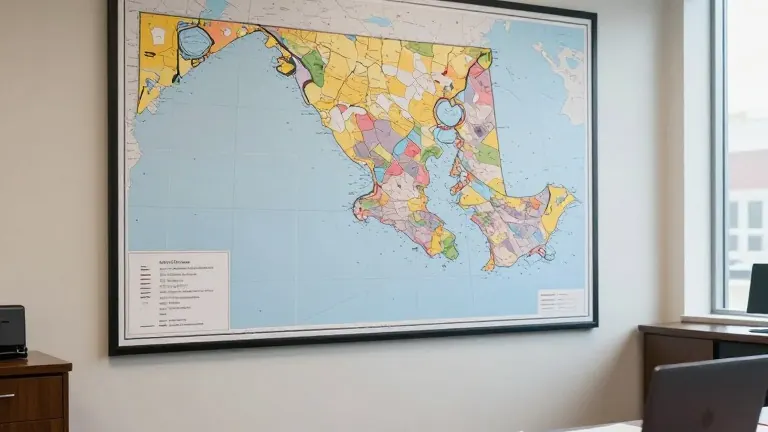
The Associated Press has projected that Maryland voters approved Question 3, a congressional redistricting amendment. The measure allows state lawmakers to redraw House districts for the 2028 elections. It does not change the map for the midterm elections currently underway in 2026.
Maryland currently has eight U.S. House seats. Democrats hold seven of those positions. The single remaining seat is located on the state's Eastern Shore and is held by a Republican. If the new district lines are drawn in favor of Democrats, the state could elect a slate of eight Democratic representatives in 2028.
The amendment follows a nationwide political trend. Republicans, led by President Donald Trump, have advanced redistricting efforts in other states. Democrats in Maryland framed Question 3 as a counter-move to that strategy.
Gov. Wes Moore supported the measure throughout the campaign. He stated that his position had not changed after the projection. “Donald Trump does not get to rewrite the rules for his allies and then tell Maryland to sit on its hands,” Moore said. He added that he is proud Marylanders used their power to push back by approving the question.
Moore noted that he had been clear for over a year that Maryland should participate in the redistricting conversation if other states did. He said he will continue fighting to ensure the state has the representation it deserves in Congress.
Republican leaders criticized the process. State Senate Minority Leader Steve Hershey called the question misleading. The Maryland Supreme Court had ruled that the proposed constitutional amendment must be placed on the November ballot. Hershey said in a statement, “The Court ultimately provided political cover for the General Assembly by allowing this misleading constitutional amendment to remain on the ballot.”
The next steps involve the state legislature drawing new district maps. The new lines will not take effect until the 2028 election cycle. Until then, the current district boundaries remain in force for the 2026 midterm elections.