36 Governor Races: The 18 to 18 Split and the Path to a Democratic Majority
With polls open across the nation, voters decide on 36 governorships, including 19 open seats, in a contest where Democrats need a net gain of two to seize the executive branch.
By Julian Schulz ·
Election Day has arrived for the 2026 midterm elections, and the focus extends beyond the House and Senate to the 36 governorships up for grabs. According to Ballotpedia, the current balance of power sees Republicans holding 26 governor's offices and Democrats 24 nationwide. However, the specific races on the ballot today present a perfect 18 to 18 split between the two parties. This even starting line creates a high stakes scenario where Democrats need to secure a net gain of just two governorships to achieve a nationwide majority. Republicans have maintained control of the governorships since 2010, making this election a critical opportunity for the Democratic Party to break that streak.
The competitive nature of these races is amplified by the fact that 19 of the 36 governorships are open seats. Ballotpedia notes that 15 governors are term limited, meaning they are unable to run for another full term. Additionally, three incumbent governors chose not to seek re-election: Iowa's Kim Reynolds, Minnesota's Tim Walz, and Wisconsin's Tony Evers. Rhode Island's Daniel McKee also left the race after losing his primary. These open seats often attract more national attention and fundraising, as there is no entrenched incumbent advantage to overcome, though the absence of a known figure can also introduce uncertainty among voters.
Nine states are identified as battlegrounds for the governor's mansion by Ballotpedia: Alaska, Arizona, Georgia, Iowa, Kansas, Michigan, Nevada, Ohio, and Wisconsin. The Associated Press and PBS NewsHour have highlighted several key matchups in these states. In Georgia, Republican health care executive Rick Jackson faces Democratic former Atlanta Mayor Keisha Lance Bottoms in a race to succeed Brian Kemp. In Nevada, Republican Governor Joe Lombardo is challenging Democratic Attorney General Aaron Ford. These races are pivotal because they represent states where the party in power could be flipped, directly impacting the national balance of executive power.
Democrats are defending five governorships in states that Donald Trump won in the 2024 presidential election: Arizona, Kansas, Michigan, Pennsylvania, and Wisconsin. Katie Hobbs is the incumbent in Arizona, while Josh Shapiro holds the seat in Pennsylvania. Conversely, Republicans are defending two governorships in states that Kamala Harris won in 2024: New Hampshire and Vermont. Kelly Ayotte is the incumbent in New Hampshire, and Phil Scott remains in office in Vermont. The Associated Press also flags Texas, Florida, and Iowa as competitive governor races, suggesting that the fight for executive control may extend beyond the nine primary battlegrounds identified by Ballotpedia.
The mood heading into this election is described by the Associated Press as a referendum on President Trump's second term. Voters are reported to be struggling with high prices and anger over an unpopular war with Iran. AP-NORC polling indicates that 35% of U.S. adults approve of Trump's job performance, while about seven in 10 say the country is heading in the wrong direction. Most respondents blame the president for high prices. This sentiment is driving the Democratic strategy, which focuses on the cost of living and oversight of the administration. Democrats are described as cautiously optimistic, aiming to capitalize on voter dissatisfaction.
Republican efforts to hold their ground face significant financial and structural headwinds. The 2026 elections are likely to be the most expensive in history, with Republican committees out-raising and out-spending their Democratic counterparts, aided by Trump-affiliated groups and Elon Musk. An AP analysis of AdImpact data shows that 88.1% of Republican general election TV ad spending went to states and districts Trump won in 2024. Despite this money edge, Republicans are bracing for potential losses in the House and are fighting to hold the Senate. The party also relies on new congressional maps in states like California, Florida, Missouri, North Carolina, Tennessee, and Texas, though it remains to be seen if these districts will vote as drawn.
The stakes of winning a governorship are high for the future of the party. A strong Democratic night would boost potential 2028 candidates such as Gavin Newsom, JB Pritzker, and Pete Buttigieg. It could also complicate the path for Vice President JD Vance. For Republicans, holding the governorships is crucial for maintaining influence over state legislatures and future redistricting cycles. RNC Chairman Joe Gruters emphasized the importance of turnout, stating that everything depends on their ability to mobilize voters. In contrast, DCCC Chair Rep. Suzan DelBene noted that the American people are angry and want change, a sentiment echoed by voters like James Moore, a librarian in Raleigh, North Carolina, who cited higher taxes and healthcare costs.
Election administration issues have also played a role in the pre-election landscape. A federal judge temporarily barred the Trump administration from carrying out a plan to prevent noncitizen voting, a move critics argued risked disenfranchising eligible voters. The administration also faced a court order to stop demanding that California election officials segregate ballots cast by people on its lists of suspected noncitizens. The U.S. Postal Service added hours and staff to ensure mail ballots are counted on time. These administrative battles highlight the ongoing tension between federal and state authorities over the conduct of the election, a theme that has persisted throughout the campaign.
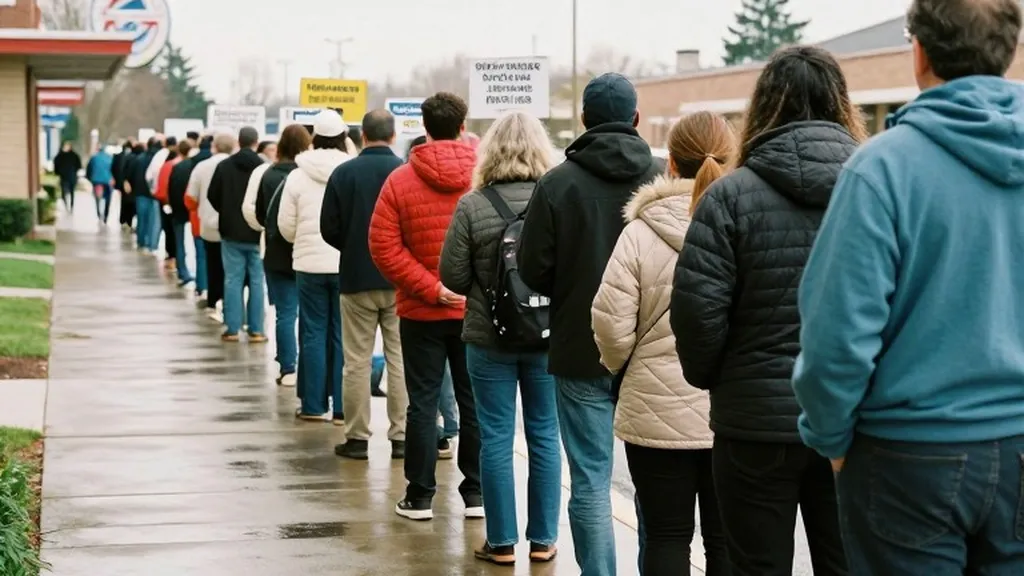
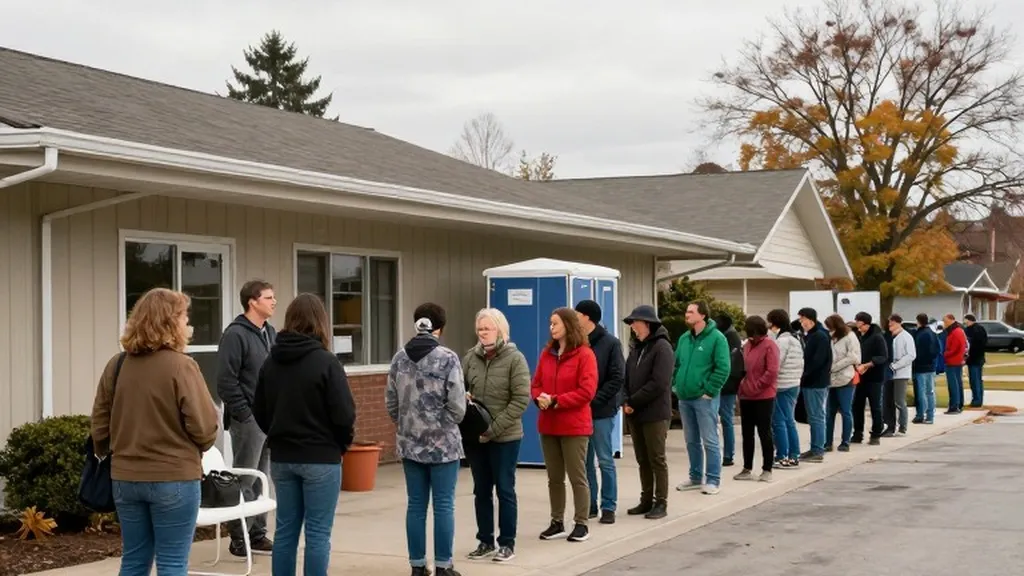
Voters across the country are heading to the polls today, with poll hours varying by state. According to Ballotpedia, polls open as early as 6 a.m. in states like California and close as late as 9 p.m. in New York. Anyone in line when polls close is entitled to vote. The early vote has been substantial, with more than 57 million people having already cast ballots as of Monday. This surpasses the early vote of four years ago in many closely watched states. As polls open, the focus turns to whether Democrats can secure the two additional governorships needed to take the majority, or if Republicans can defend their current holdings in this evenly split field.