Voters Focus on Prices and Tariffs as AP-NORC Poll Shows Trump at 25% Economy Approval
With polls open, AP-NORC data indicates economic strain is the primary driver for voters in key swing districts and states.
By Tomas Gonzalez ·
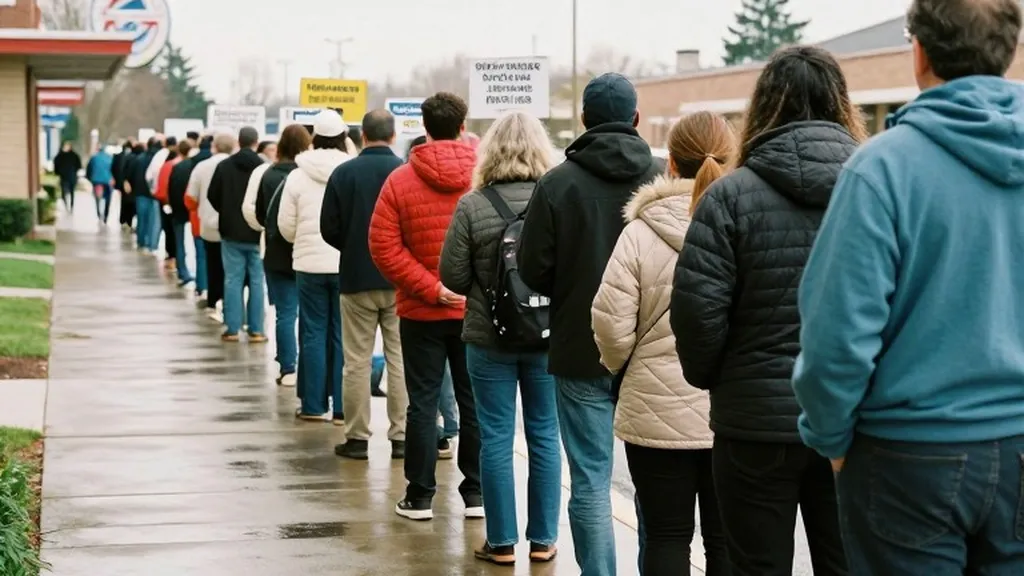
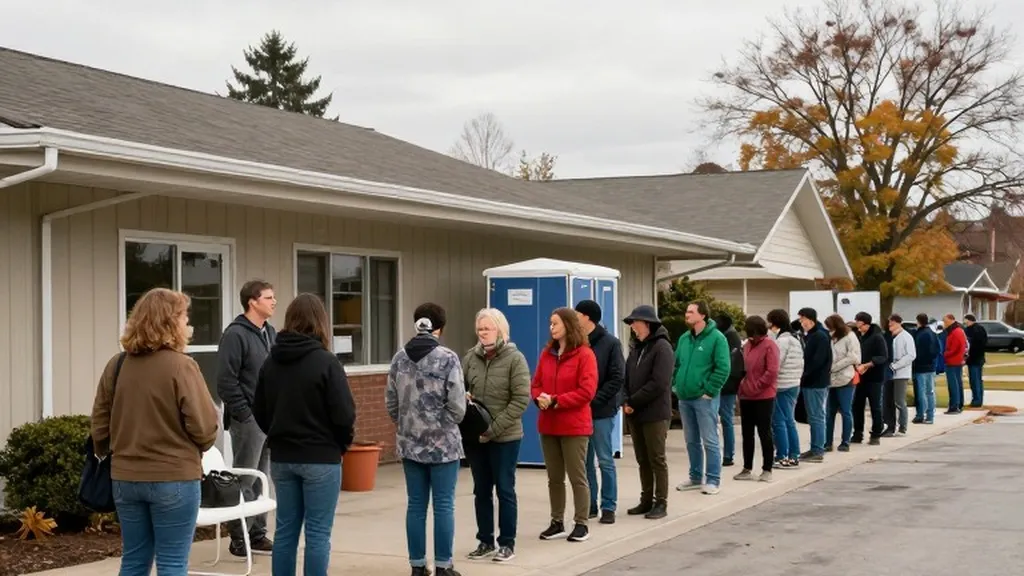
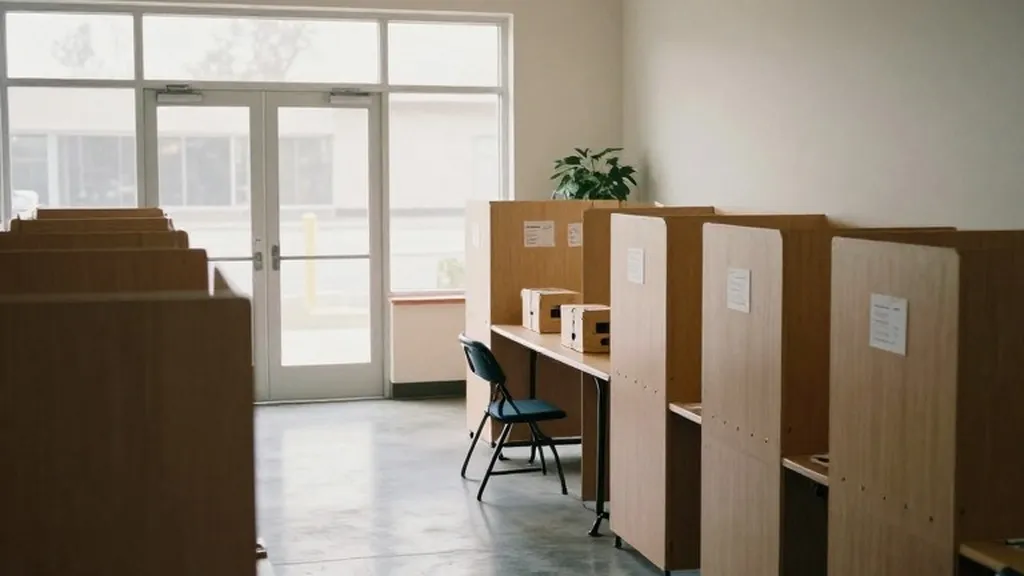
On Tuesday, November 3, 2026, American voters are casting ballots in the midterm election, a contest that will determine which party controls Congress for the final two years of President Donald Trump's second term. The Associated Press describes the day as a referendum on the administration, noting that many citizens are struggling with high prices and expressing anger over an unpopular war with Iran. As polling places open across the nation, the central narrative has shifted from partisan identity to the tangible impact of economic policy on household budgets.
The Associated Press and NORC at the University of Chicago released polling data showing that 35 percent of U.S. adults approve of President Trump's job performance. When specifically asked about his handling of the economy, approval drops to 25 percent. Approximately seven in ten adults say the country is heading in the wrong direction, with most blaming the President for the current high prices. These figures provide a snapshot of the mood in polling places, where voters are evaluating the cost of living against the backdrop of ongoing geopolitical conflicts.
In Raleigh, North Carolina, the economic anxiety is palpable. James Moore, a 57-year-old librarian, stated that he is paying more taxes, more for healthcare, and more for everything. His sentiment reflects the concerns of voters in North Carolina, a state that is using a new congressional map after mid-decade redistricting. The state is a focal point for both chambers, with a competitive Senate race between Democratic former Governor Roy Cooper and Republican former RNC chair Michael Whatley, as well as a gubernatorial contest. The new district maps in states like North Carolina, Florida, Texas, and Missouri are intended to solidify Republican gains, but the AP notes that these new districts may not vote as drawn if economic discontent persists.
Contrasting this view is the perspective of Mark Barker, a voter in Palm Beach Gardens, Florida. Barker said he has been following Trump the whole time and believes he is doing an awesome job. Florida is a critical battleground, with a special Senate election for the remainder of Marco Rubio's term and a competitive governor's race. The state is also one of six using new congressional maps. In Palm Beach, the interplay between Trump's personal popularity and the broader economic dissatisfaction creates a complex dynamic for both parties as they fight for the 435 House seats and 35 Senate seats up for grabs.
The economic narrative is heavily influenced by tariff policies, which have contributed to the strain on consumers. In Maine, a state where the AP says economic strain and tariffs have made the Senate race competitive, Senator Susan Collins faces a challenge from Democratic former state Senate President Troy Jackson. Maine is currently rated as a toss-up by major race tracking services. The state's voters are weighing the President's trade policies against the rising cost of goods, a theme that resonates in other swing states like Michigan and Georgia, where the 2024 presidential margins were narrow.
The financial stakes of the election are high, with the 2026 cycles likely to be the most expensive in history. Republican committees have outraised and outspent their Democratic counterparts, aided by Trump-affiliated groups and Elon Musk. An AP analysis of AdImpact data shows that 88.1 percent of Republican general election TV ad spending went to states and districts Trump won in 2024. This strategy aims to protect the President's base, even as Democrats hope to capitalize on economic anger to flip the House. Republicans currently hold a 218 to 214 advantage in the House, meaning Democrats need a net gain of three districts to take control.
In the Senate, Democrats need a net gain of four seats to achieve a majority, a difficult hurdle given that Republicans hold 53 seats. Eleven senators are not running again, creating open seats in states like Iowa, Michigan, Montana, New Hampshire, and North Carolina. These open seats are often more competitive than incumbent races, as voters are not tied to a specific individual. In North Carolina, the retirement of Senator Thom Tillis, who clashed with Trump, leaves a void that former Governor Roy Cooper is attempting to fill. The race is seen as a bellwether for the broader Democratic effort to reclaim power.
The administration has faced legal challenges regarding election administration, with a federal judge temporarily barring a plan to prevent noncitizen voting. Critics argue this risks disenfranchising eligible voters, while the Justice Department threatens to prosecute local election officials. These legal battles add a layer of tension to the day, with Democrats fearing interference and Republicans bracing to lose the House. The U.S. Postal Service has added hours and staff to ensure mail ballots are counted on time, a crucial detail in states like California, Colorado, and Oregon where mail voting is prevalent.
President Trump held dozens of rallies in the final days before the election, concluding on Sunday in Salina, Kansas. He urged voters to pretend he was on the ballot, a strategy aimed at mobilizing his base in a state that has become central to the Senate fight. Republican candidates have largely kept their distance from the President, acknowledging the difficult environment. The President's continued claims about voting fraud, including that noncitizens vote in large numbers, have fueled debates about the integrity of the process, even as more than 57 million people had already voted as of Monday.
If Democrats win even one chamber, investigations and possible impeachment proceedings become likely. House Democratic Leader Hakeem Jeffries, who would be the first Black speaker if the Democrats take the House, has outlined a 100-day agenda focused on the cost of living and oversight. A strong Democratic night would also boost potential 2028 candidates like Gavin Newsom, JB Pritzker, and Pete Buttigieg, while potentially complicating the path for Vice President JD Vance. Republicans are trying to break the midterm pattern of seat loss, relying on redistricting and high turnout to hold their ground.