Eisenkot campaigns in Ofakim as 1.2 million Israelis cast ballots
With polls closing at 10 p.m., the race between the incumbent prime minister and his rival remains too close for polls to predict a winner.
By Tomas Gonzalez ·
Gadi Eisenkot met voters in Ofakim on Tuesday morning, a southern community targeted during the October 7, 2023, attack. He told residents that a government with responsibility would start the day near the Gaza border. Eisenkot, the former military chief and Netanyahu’s chief rival, promised to dismantle Hamas’s governing force within 18 months of taking office. He lost his son and two nephews in combat in Gaza. By 10 a.m., the Central Elections Committee reported that 1.2 million Israelis, or 17% of eligible voters, had already cast their ballots.
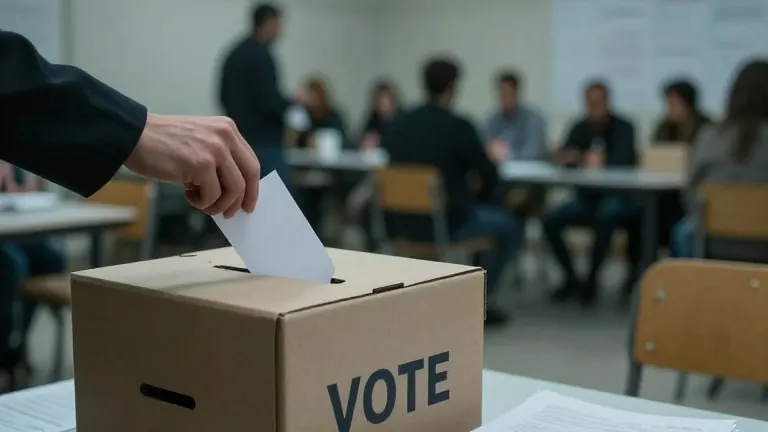
Voting is underway at approximately 12,000 polling stations across Israel. More than 7.3 million citizens are eligible to vote, including roughly 330,000 young Israelis who attended high school during the war. Polls will close in most locations at 10 p.m. Ballots are counted by hand at each station. Over 15,000 cameras and thousands of volunteer monitors are watching the process. A minimum of 3.25% of the popular vote is required for a party to secure a seat in the 120-member Knesset. Opinion polls indicate a tight contest with no clear winner, suggesting weeks of coalition negotiations.
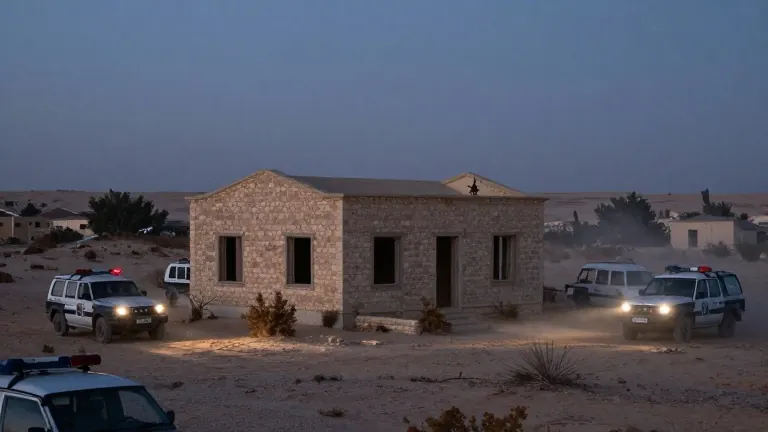
Mansour Abbas, leader of the Islamist party Ra’am, voted in his hometown in the Galilee. He said record turnout in Arab communities could unseat the current right-wing government. Abbas called the arrests of three Ra’am activists in the Negev Desert “an attempt to influence the election results.” Police said the three were arrested on suspicion of planning to bribe citizens. Abbas noted shortages of Arabic language ballots at some locations but encouraged supporters to vote.
In Jerusalem, Noga Mizrahi, a voter from kibbutz Nirim, described the election as critical. In Tel Aviv, families of hostages and victims of the 2023 attack held a moment of silence. Yona Adam, the mother of a victim, urged voters to remember those who are gone. In Kiryat Shmona, a Netanyahu supporter tore down a poster of Eisenkot. Nisim Cohen, a reservist voting in Jerusalem, said he trusted Netanyahu to keep the country secure and continue the wars in Gaza, Lebanon, and Iran.
Itamar Ben-Gvir, the national security minister, voted and said he hoped to become defense minister. He called the role beneficial for soldiers and the people of Israel. President Donald Trump backed Netanyahu’s reelection earlier this month. Netanyahu has led Israel for nearly two decades. A poor result could end his career, while a victory would solidify his status as a political survivor. The campaign focused on Netanyahu’s role in the security breakdown, his push to exempt ultra-Orthodox Jews from military service, and a 2023 judicial overhaul.
Eyal Sher, a volunteer for the civil society group Elections Guards, said he wanted to ensure procedures remained intact. He described the government as corrupt and eager to stay in power. The election determines the composition of the Knesset, where parties must form alliances to create a majority. No single party has ever won a majority on its own.
Source: WTOP News