Israelis Vote for 120 Knesset Seats as Polls Show No Clear Winner
With the war in Gaza and tensions with Iran continuing, the election is expected to result in a stalemate that could force weeks of coalition talks or a second vote.
By Julian Schulz ·
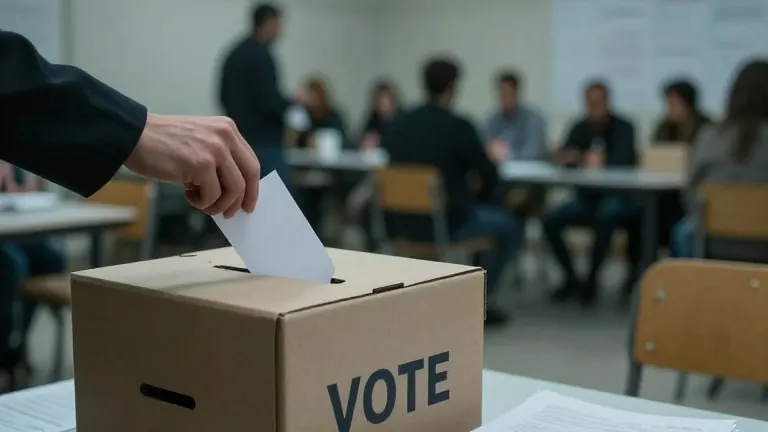
Voters in Tel Aviv and across the country cast ballots on Tuesday for all 120 seats in the Knesset, the Israeli parliament. The election is the first held since the October 7, 2023, attacks by Hamas, which authorities have described as the deadliest incident since the state's founding in 1948. The nation remains engaged in a multi-front war involving Gaza, Lebanon, and Syria, with two direct rounds of conflict with Iran already concluded and Prime Minister Benjamin Netanyahu advocating for a third.
Polls indicate a tight race with no projected majority for either the right-wing bloc led by Netanyahu or the opposition change bloc. Yohanan Plesner, president of the Israel Democracy Institute, stated that an indecisive outcome is the most likely result. Right-leaning pollsters favor Netanyahu's camp, while left-leaning polls show an advantage for the opposition. Most projections suggest neither side will secure the 61 seats required to form a government unilaterally, potentially leading to protracted negotiations or a repeat election.
Netanyahu, the longest-serving prime minister in Israel's history, is seeking a fourth term. His Likud party aims to replicate the current coalition with ultranationalist and religious parties. His campaign centers on two main arguments: that only he can govern without support from Arab parties, and that he needs additional time to complete military operations in Gaza, Lebanon, and Iran. His campaign slogan in Hebrew translates to: "Either right wing or Palestine, either right wing or a nuclear bomb."
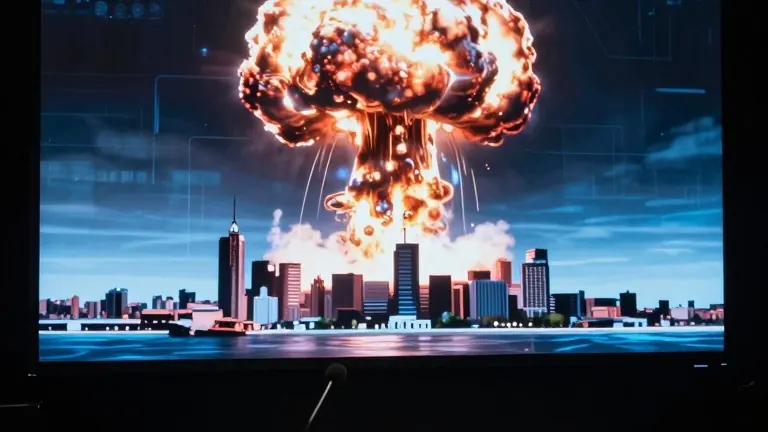
U.S. President Donald Trump provided explicit support for Netanyahu last week, warning that America might have to handle the threat from Iran alone if Netanyahu loses power. "If Israel has the wrong Leader, which would be anyone other than Bibi, America will have to do this work ourselves, and I am not inclined to do so," Trump said. Netanyahu has used this endorsement to argue that his leadership is essential to preventing Iran from obtaining a nuclear weapon. Over the weekend, he posted an AI-generated image of a mushroom cloud over Tel Aviv on social media to reinforce the existential threat narrative.
On the ground, Netanyahu's supporters cite his global stature and charisma. Benny Abraham, a restaurant owner, told CBS News that Netanyahu handles the world with a strong voice and is viewed as the king of Israel. "Bibi is charismatic," Abraham said. "The world loves him."
The opposition is a diverse coalition of Arab, right, left, and center parties united by the goal of removing Netanyahu. The front-runner to lead this bloc is Gadi Eisenkot, leader of the centrist Yashar party and former military chief. Eisenkot, who lost his son and two nephews in the Gaza war, is positioning himself as a unifying figure. His party includes a high proportion of women candidates, contrasting with the male-dominated Netanyahu coalition. Eisenkot promised to launch a state inquiry into the security failures of October 7, a measure Netanyahu has blocked.
Eisenkot responded to Netanyahu's nuclear rhetoric by accusing him of fear-mongering. "This time, it won't work for him," Eisenkot said. Uzi Aharoni, a 73-year-old engineer from Tel Aviv, described Eisenkot as straight and honest, contrasting him with what he called Netanyahu's corrupt family. "He's the kind of leader who will take care of us, the people of Israel," Aharoni said.
Voter turnout is a critical variable that polls struggle to predict. Arab Israelis, who comprise approximately 20% of the population, are expected to have higher turnout this year to prevent Netanyahu from governing with far-right allies. Jehad Abomoch, a cafe owner in Baqa al Gharbiya, said the last four years were a catastrophe, leaving Arab Israelis feeling they have no hope or future. "The higher the Arab turnout, the less likely that Mr. Netanyahu.. can form another government," Plesner noted.
Two new parties focused on the mandatory military service of ultra-Orthodox men are hovering near the electoral threshold. Their performance could tip the balance of power, as this issue cuts through Netanyahu's traditional support base. If neither bloc wins a majority, several outcomes are possible. Parties may break promises and switch sides, as has happened in previous elections. Alternatively, the change bloc could form a minority government with the support or abstention of Arab parties. If negotiations fail, Israel will hold new elections, a scenario that occurred five times between 2019 and 2022.
Plesner predicted that if politicians stick strictly to their campaign promises, Israel will face another election. "I'm sure that most politicians are not interested in that," he added.
Source: CBS News